
Wisteria
Ogata Kōrin, 17th–18th century
About this artwork
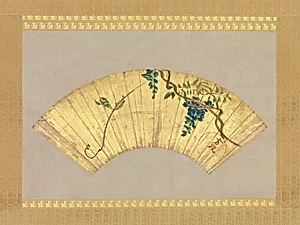
Ogata Kōrin's *Wisteria*, created during Japan's Edo period (16151868), captures the era's fascination with nature's fleeting beauty amid a time of peace and cultural flourishing. A master of the Rinpa, Kōrin (1658–1716) drew inspiration from classical Japanese painting traditions while innovating with bold, decorative flair. This work, likely depicting cascading wisteria blooms—a symbol of elegance and endurance—exemplifies his ability to transform everyday motifs into poetic spectacles. Originally painted on a folding fan and later remounted as a hanging scroll, the artwork measures a compact 6 3/4 x 20 3/4 inches, blending portability with grandeur. Kōrin employed ink, vibrant colors, and gold flecks on paper to create a shimmering, asymmetrical composition typical of Rinpa aesthetics. The gold background evokes luxury, mimicking the opulence of screens and sliding doors in elite homes, while the fan format highlights Edo Japan's refined urban culture. Housed in the Metropolitan Museum of Art's Asian Art Department as part of the H. O. Havemeyer Collection (1929), *Wisteria* invites viewers to savor nature's rhythm. Its preservation from fan to scroll underscores the enduring value of such intimate masterpieces in Japanese art.