
狼牙彫根付|Wolf
late 18th–early 19th century
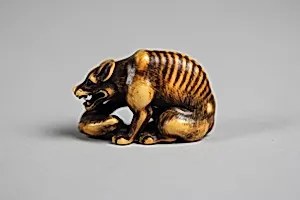
Medium
Carved ivory
Dimensions
H. 1 1/4 in. (3.2 cm); W. 7/8 in. (2.2 cm); D. 2 1/8 in. (5.4 cm)
Classification
Netsuke
Culture & Period
Japan · Edo period (1615–1868)
Department
Asian Art
Museum
Metropolitan Museum of Art, New York, NY
Credit
H. O. Havemeyer Collection, Bequest of Mrs. H. O. Havemeyer, 1929
Accession Number
29.100.918
Rights
Public Domain
Tags
Art Historical Context
This delightful netsuke, titled *狼牙彫根付* (Rōga-bōri netsuke, or "Wolf's Fang Carving") and simply "Wolf" in English, was crafted by the skilled Japanese artist Tomotada the late 18th early 19th century amid the vibrant Edo period (1615–1868). Measuring just 1¼ inches high, this carved ivory toggle exemplifies the miniature artistry that defined netsuke—small, intricately sculpted objects used to secure inro pouches to a kimono sash, blending functionality with whimsy. Tomotada's work showcases the mastery of ivory carving, a prized medium for its creamy translucency and ability to capture fine details like fur texture and fierce expressions. The wolf motif, rare in netsuke, draws from Japanese folklore where wolves symbolized protection and wilderness, adding cultural depth to this pocket-sized sculpture. Such pieces were status symbols for samurai and merchants, reflecting Edo Japan's flourishing urban culture and love for playful, naturalistic animal forms. A gem from the H.O. Havemeyer Collection, bequeathed to the Metropolitan Museum of Art in 1929, this netsuke invites us to marvel at the carver's precision—transforming a tiny block of ivory into a lively guardian that once dangled from a noble's belt.