
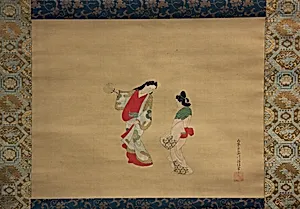
Woman and Attendant
18th century
Medium
Hanging scroll; ink and color on silk
Dimensions
Image: 11 1/4 × 14 3/4 in. (28.6 × 37.5 cm) Overall with mounting: 44 3/4 × 19 3/4 in. (113.7 × 50.2 cm) Overall with knobs: 44 3/4 × 21 5/8 in. (113.7 × 54.9 cm)
Classification
Paintings
Culture & Period
Japan · Edo period (1615–1868)
Department
Asian Art
Museum
Metropolitan Museum of Art, New York, NY
Credit
Fletcher Fund, 1933
Accession Number
33.87.1
Rights
Public Domain
Tags
Art Historical Context
**Woman and Attendant** by Nishikawa Sukenobu an exquisite 18th-century hanging scroll from Japan's Edo period (1615–1868), captures the of feminine life in ink and color on silk. about 11¼ × 14¾ inches in its image area, this intimate painting exemplifies the ukiyo-e tradition—the "floating world" of urban pleasures and fleeting beauty that flourished in Edo (modern Tokyo). Sukenobu (1671–1751), a master of bijin-ga (pictures of beautiful women), specialized in depicting graceful figures with a keen eye for fashion, posture, and subtle emotion. Rendered in delicate brushwork, the silk medium allows vibrant colors and fine details to shimmer, typical of hanging scrolls displayed in private homes or tea rooms for personal appreciation. The subject—a poised woman attended by a servant—reflects Edo society's fascination with women's roles, from courtesans to everyday beauties, amid a booming merchant class and woodblock print culture. This Fletcher Fund acquisition at the Metropolitan Museum of Art highlights Sukenobu's influence on later ukiyo-e giants like Utamaro. It invites viewers to ponder the refined artistry of a peaceful era, where silk scrolls blended decoration with narrative charm. (198 words)
About the Artist
Nishikawa Sukenobu · 1671–1751
Japanese, 1671–1750