
Woman Playing the Shamisen
c. 1769
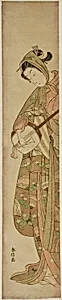
Medium
Color woodblock print; hashira-e
Dimensions
62.9 × 12.1 cm (24 3/4 × 4 3/4 in.)
Classification
woodblock print
Department
Arts of Asia
Museum
Art Institute of Chicago
Accession Number
22990
Rights
Public Domain
Art Historical Context
Suzuki Harunobu's *Woman Playing the Shamisen*, created around 1769, is a captivating example of ukiyo-e, the "pictures of the floating world" that flourished in Edo-period Japan (1603–1868). This color woodblock print, known as a *hashira-e* or pillar print due to its tall, narrow format (62. × 12.1 cm), was designed to hang on architectural pillars in homes or teahouses, offering an intimate vertical glimpse into everyday elegance. Harun, a pioneering master of the genre, revolutionized printmaking in 1765 by introducing full-color *nishiki-e* (brocade pictures), layering vibrant hues through meticulous woodblock carving and precise registration. Here, a graceful woman strums the shamisen—a three-stringed instrument central to kabuki theater, folk music, and geisha performances—evoking the refined pleasures of urban life. Her flowing kimono and serene expression highlight Harunobu's signature style: delicate lines, subtle gradations (*bokashi*), and a focus on *bijin-ga* (beautiful women), blending eroticism with poetic beauty. Housed in the Art Institute of Chicago's Arts of Asia department, this print not only showcases technical innovation but also captures the cultural vibrancy of 18th-century Japan, where art democratized luxury for the merchant class. A timeless celebration of music and femininity!
About the Artist
Suzuki Harunobu · 1725–1770
Suzuki Harunobu (c. 1725-1770) was a Japanese ukiyo-e artist who revolutionized woodblock printing by developing nishiki-e—full-color prints using multiple woodblocks—in 1765. Before Harunobu, Japanese prints were limited to two or three colors; his innovation unleashed the entire artist's palette, transforming ukiyo-e into the vibrant art form that would later captivate Western artists from Manet...