
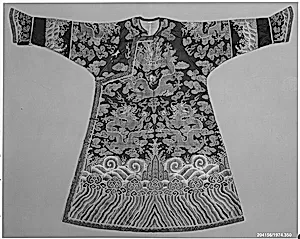
Woman's Imperial State Robe
Unknown Artist
Medium
Silk, metallic thread
Dimensions
53 1/2 in. (135.9 cm) neck to hem in back
Classification
Costumes-Woven
Culture & Period
China · Qing dynasty (1644–1911), Kangxi period (1662–1722)
Department
Asian Art
Museum
Metropolitan Museum of Art, New York, NY
Credit
Gift of Sonia and Joseph Lesser, 1974
Accession Number
1974.350
Rights
Public Domain
Tags
Art Historical Context
This exquisite *Woman's Imperial State Rob* hails from China's Qing dynasty during the Kangxi period (2–1722), a golden age of imperial prosperity under Emperor Kangxi.ed for high-ranking women of the imperial court—likely an empress or consort—this robe was reserved for formal state ceremonies, embodying the pinnacle of Manchu fashion and Confucian hierarchy. Its impressive length of 53½ inches (135.9 cm) from neck to allowed it to drape elegantly over layered undergarments, creating a silhouette of refined power. Woven from luxurious silk and shimmering metallic threads, the robe showcases masterful textile artistry typical of Qing workshops. Dragon motifs, symbolizing imperial authority and cosmic harmony, dominate the design—a rare privilege for elite women, as dragons traditionally evoked the emperor's divine mandate. The intricate weaving and metallic embroidery not only caught the light in grand palaces but also conveyed status through regulated symbolism, where five-clawed dragons signified the highest echelons. Today, this gift to the Metropolitan Museum of Art from Sonia and Joseph Lesser in 1974 offers a tangible glimpse into Forbidden City splendor, highlighting how clothing wove politics, artistry, and tradition into the fabric of empire.