
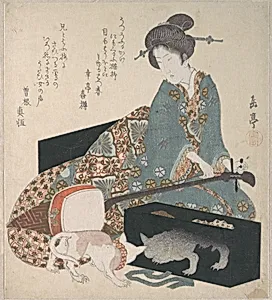
三味線の調弦|Woman Tuning a Shamisen and a Cat Looking at its Own Reflection
Yashima Gakutei, mid- 1820s
About this artwork
In the vibrant world of Edo-period Japan (1615–8), Yashima Gakutei crafted this delightful surimono woodblock around the mid-1820s. Titled *Woman Tuning a Shamisen and a Cat Looking at its Own Reflection*, it captures an intimate domestic moment: a woman delicately adjusting the strings of her shamisen—a three-stringed lute central to traditional music, theater, and geisha performances—while a curious cat peers at its shimmering reflection, adding a touch of whimsical humor. Part of a luxurious album of prints, this small gem (8 3/16 x 7 5/16 in.) uses ink and color on paper, showcasing the refined ukiyo-e ("pictures of the floating world") tradition that celebrated everyday beauty and ephemera. Surimono like this were privately commissioned, often for New Year's greetings or poetry gatherings, featuring high-quality printing techniques such as subtle gradations of color (bokashi) and metallic accents for a tactile elegance. Gakutei, a master of the form, blended poetic elegance with keen observation, highlighting women's roles in musical culture and the affectionate presence of cats as beloved household companions in Japanese homes. This piece offers a window into Edo society's blend of artistry, leisure, and quiet joy. Today, it graces the Metropolitan Museum of Art's Asian Art collection, part of the esteemed H. O. Havemeyer bequest (1929), inviting us to savor the harmonious interplay of sound, sight, and feline mischief.