
Woo-She-Shan
1876
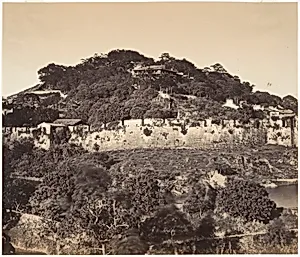
Medium
Albumen silver print from glass negative
Dimensions
Image: 9 5/16 × 10 15/16 in. (23.7 × 27.8 cm)
Classification
Photographs
Department
Photographs
Museum
Metropolitan Museum of Art, New York, NY
Credit
Gilman Collection, Purchase, Robert Rosenkranz Gift, 2005
Accession Number
2005.100.494.2
Rights
Public Domain
Tags
Art Historical Context
In 1876, Chinese photographer Tung Hing capturedWoo-She-Shan* using the albumen silver print process from a glass negative, cutting-edge technique of the era that produced richly toned images with exceptional detail. This 9 5/16 × 10 15/16 in. photograph, now in the Metropolitan Museum of Art's Gil Collection, showcases a panoramic view of a Chinese town nestled amid fortifications, houses, and architectural landmarks. The crisp clarity of the albumen medium highlights intricate rooftops, sturdy walls, and communal structures, offering a vivid snapshot of daily life in late Qing dynasty China. Tung Hing, one of the pioneering native photographers in 19th-century Asia, documented his homeland during a time when Western photographic technology was rapidly spreading eastward. Albumen prints, made by coating paper with egg whites and silver salts, were prized for their permanence and luminosity, making them ideal for preserving scenes of cultural heritage. This image stands out for its ethnographic value, revealing fortified towns that blended defensive architecture with residential harmony—essential features of rural Chinese settlements amid historical unrest. Today, *Woo-She-Shan* invites visitors to ponder the fusion of tradition and innovation, bridging 1870s China with modern eyes through its timeless composition and technical mastery.