
Wooden Doll
c. 1936
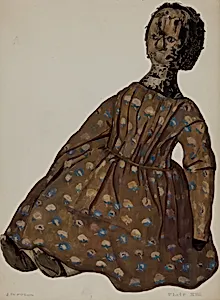
Medium
watercolor, graphite, and gouache on paper
Dimensions
overall: 35.5 x 26 cm (14 x 10 1/4 in.) Original IAD Object: 16 3/4" high
Classification
Index of American Design
Department
CG-W
Museum
National Gallery of Art, Washington, D.C.
Credit
Index of American Design
Accession Number
1943.8.15483
Rights
Public Domain
Art Historical Context
**Wooden Doll** *Jane Iverson, c. 1936* Watercolor, graphite, andache on paper, 35.5 × 26 cm (14 × 10¼ in.) *Index of American Design, National Gallery of Art* Created by artist Jane Iverson around 1936, *Wooden Doll* is a meticulous rendering from the Index of American Design, a landmark WPA Federal Art Project (1935–1942). This initiative employed hundreds of artists during the Great Depression to document everyday American folk art objects through vibrant, precise watercolors, preserving cultural heritage amid economic hardship. Iverson's sheet captures a charming 16¾-inch-high wooden doll, highlighting its folk craftsmanship with fine graphite underdrawing, layered gouache for texture, and watercolor washes for subtle color. The Index elevated folk art as a vital expression of American identity, influencing later appreciation of vernacular design. Iverson's technique—combining media for realism and depth—showcases the doll's carved details and whimsical form, evoking 19th-century toy-making traditions. Displayed in the National Gallery of Art, this work invites visitors to connect with America's handmade past, blending artistry with historical preservation.
About the Artist
Jane Iverson · 1910–1997
Jane Iverson is an artist whose biographical details — including her dates, nationality, and training — are not well represented in the major art historical reference sources currently available. The limited documentation surrounding her career makes it difficult to characterize her practice in relation to any specific school, movement, or period. Works attributed to Iverson in museum collections...