
Worker Shabti of Nauny
Unknown Artist
ca. 1050 B.C.
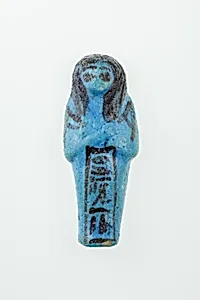
Medium
Faience
Dimensions
H. 8.4 × W. 3.3 × D. 2 cm (3 5/16 × 1 5/16 × 13/16 in.)
Classification
Shabti, worker, Nauny
Period
Third Intermediate Period
Department
Egyptian Art
Museum
Metropolitan Museum of Art, New York, NY
Credit
Rogers Fund, 1930
Accession Number
30.3.29.14
Rights
Public Domain
Art Historical Context
Step into the mystical world of ancient Egypt with the *Worker Shabti of Na*, a petite faience figurine from around 1050 B.C. Crafted during Dynasty 21 of the Third Period, this 8.4 cm tall servant stands ready to toil in the afterlife for Nauny, a high-ranking Theban noblewoman likely serving as a chantress in the temple of Amun. Shabtis like this one embodied the Egyptian hope for eternal ease: while elites rested, these magical workers—activated by spells from the Book of the Dead—would handle daily labors in the Fields of Reeds. Made of vibrant blue-green faience, a glazed quartz-based ceramic prized for mimicking precious stones like lapis lazuli or turquoise, this shabti was probably mold-made for efficiency, allowing mass production of sets numbering 365 (one per day of the year) plus overseers. The glossy finish and hieroglyphic inscriptions highlight skilled New Kingdom techniques adapted into this transitional era, when Theban priests held sway amid political fragmentation. This charming artifact, acquired by The Met through the Rogers Fund in 1930, reveals profound cultural beliefs in immortality and divine service. Gaze closely at its determined posture—molding eternal devotion into a handful of glazed clay!