
Worker Shabti of Nauny
Unknown Artist
ca. 1050 B.C.
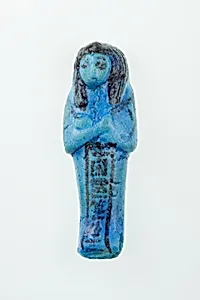
Medium
Faience
Dimensions
H. 9.2 × W. 3.1 × D. 2.4 cm (3 5/8 × 1 1/4 × 15/16 in.)
Classification
Shabti, worker, Nauny
Period
Third Intermediate Period
Department
Egyptian Art
Museum
Metropolitan Museum of Art, New York, NY
Credit
Rogers Fund, 1930
Accession Number
30.3.28.29
Rights
Public Domain
Art Historical Context
Welcome to the Egyptian Art galleries at the Metropolitan Museum of Art, where we encounter the enchanting **Worker Shabti of Nauny** (ca. 1050 B.C.). This petite faience figurine, standing just 9.2 cm tall, hails from Egypt's Third Intermediate Period, specifically Dynasty 21—a time of political fragmentation following the grandeur of the New Kingdom, when Theban priests held sway and tomb goods emphasized eternal service. Crafted from vibrant blue-green faience—a glazed composite of quartz, lime, and copper that evokes the Nile's fertile hues and rebirth— this shabti embodies ancient Egyptian beliefs in the afterlife. Shabtis, or "ushabtis," were magical servants buried with the elite like Nauny, a high-ranking woman possibly linked to the priesthood. Inscribed with spells from the Book of the Dead, they were activated to perform laborious tasks, freeing the deceased for leisure in the Field of Reeds. Though mass-produced by unknown artisans, its precise modeling and glossy finish highlight the era's enduring faience mastery. Acquired through the Rogers Fund in 1930, this tiny worker offers a poignant glimpse into Nauny's hopes for eternity, blending piety, artistry, and ingenuity in a form both humble and profound.