
Wreath fragment
Unknown Artist
18th century
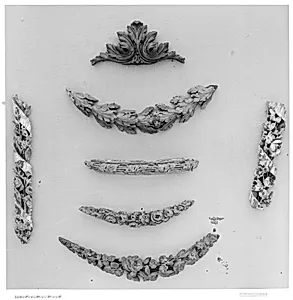
Medium
Oak, gilded
Dimensions
Overall: 13 1/4 × 2 3/8 in. (33.7 × 6 cm)
Classification
Woodwork
Culture
French
Department
European Sculpture and Decorative Arts
Museum
Metropolitan Museum of Art, New York, NY
Credit
Gift of J. Pierpont Morgan, 1906
Accession Number
07.225.333.9
Rights
Public Domain
Tags
Art Historical Context
This exquisite *Wreath fragment*, crafted in 18th-century France from durable oak and adorned with gilding, offers a glimpse into the lavish world of European decorative arts. just 13¼ × 2⅜ inches (33.7 × 6 cm), this piece of woodwork features intricately carved motifs of flowers and leaves,oking the natural abundance celebrated in French ornamental design. The gilding—a thin layer of gold leaf applied over the wood—enhanced its luster, transforming humble oak into a symbol of fit for aristocratic interiors. In the rococo-influenced salons and châteaus of Louis XV's era, such fragments likely embellished grand furniture, wall panels, or architectural moldings, where floral wreaths symbolized vitality and festivity. Oak's strength made it ideal for carving fine details, while gilding techniques, involving bole clay and burnishing, created a radiant, jewel-like finish that caught the candlelight of period rooms. This artifact highlights the virtuoso craftsmanship of anonymous French artisans, whose work blended artistry with opulence. A generous gift from financier J. Pierpont Morgan to The Metropolitan Museum of Art in 1906, this fragment preserves a tangible link to France's gilded age. Visitors, pause to admire how its preserved elegance whispers of forgotten grandeur.