
Writing Box
18th century
Medium
Lacquer with pewter and gold
Dimensions
H. 1 5/8 in. (4.1 cm); W. 8 1/4 in. (21 cm); L. 9 in. (22.9 cm)
Classification
Lacquer
Culture & Period
Japan · Edo period (1615–1868)
Department
Asian Art
Museum
Metropolitan Museum of Art, New York, NY
Credit
The Howard Mansfield Collection, Purchase, Rogers Fund, 1936
Accession Number
36.100.139a–d
Rights
Public Domain
Tags
Art Historical Context
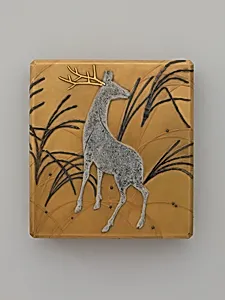
This exquisite *Writing Box* (suzuribako), attributed to the renowned artist Ogata Kōrin (1658–1716), exemplifies the opulent lacquerware traditions of Japan's Edo period (16151868). Crafted in the 18th century, this compact portable case—measuring just 1⅝ × 8¼ × 9 inches—held an inkstone, brushes, and paper for calligraphy and letter-writing, a refined pursuit among samurai, merchants, and literati during this era of peace and cultural flourishing. Kōrin, a master of the Rinpa school, transformed everyday objects into poetic masterpieces through innovative techniques like *maki-e* (sprinkled gold or silver powder over lacquer) combined here with pewter and gold inlays. Graceful deer motifs, likely rendered in his signature asymmetrical, bold style against shimmering grounds, evoke nature's elegance and Shinto reverence for wildlife, symbolizing longevity and purity. The meticulous layering of urushi lacquer, sap from the lacquer tree, not only ensured durability but also created a luminous, jewel-like surface prized by collectors. Acquired through The Howard Mansfield Collection and now in The Metropolitan Museum of Art's Asian Art department, this box highlights Edo Japan's fusion of functionality and artistry, bridging utility with aesthetic splendor for discerning patrons.
About the Artist
Ogata Kōrin · 1658–1716
Noted as one of the most important Japanese artists of the 17th century; known for paintings of irises and other subjects. He was regarded, along with Sotatsu, as one of the masters of the Sotatsu-Koetsu school of decorative painting, including painted screens and textile designs. He was descended from a samurai who had served under the Ashikaga rulers.