
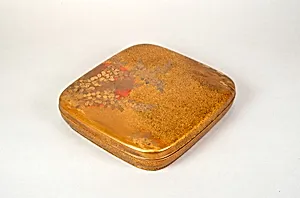
Writing Box with Design of Flowering Bush Clover and Sun
Unknown Artist
first half of the 19th century
Medium
Gold, silver togidashimaki-e, hiramaki-e, takamaki-e, cut-out gold foil application
Dimensions
H. 2 1/8 in. (5.4 cm); W. 9 1/4 in. (23.5 cm); D. 9 7/8 in. (25.1 cm)
Classification
Lacquer
Culture & Period
Japan · Edo period (1615–1868)
Department
Asian Art
Museum
Metropolitan Museum of Art, New York, NY
Credit
Bequest of Benjamin Altman, 1913
Accession Number
14.40.863a–e
Rights
Public Domain
Tags
Art Historical Context
This delicate writing box (*suzuribako*), crafted in Japan during the first half of the th century in the Edo period (161–1868), exemplifies era's mastery of lacquerware. Measuring just over 2 inches high and nearly 10 inches square, it was designed as a portable vanity for scholars, merchants, and elites, containing compartments for inkstones, brushes, and papers. The surface features a poetic design of flowering bush clover—symbolizing autumn's fleeting beauty and resilience—bathed in radiant sunlight, evoking harmony between nature and the cosmos, a common motif in Japanese art. The box's brilliance comes from advanced *maki-e* techniques, where artisans sprinkled fine gold and silver powders onto wet lacquer for shimmering effects. *Hiramaki-e* creates flat, luminous fields; *takamaki-e* builds raised, textured motifs; *togidashimaki-e* burnishes layers to reveal subtle colors beneath; and cut-out gold foil adds intricate, jewel-like details. These methods, refined over centuries, highlight Edo Japan's prosperity and the lacquer artists' (*urushi-e* specialists) extraordinary patience and skill. Bequeathed to the Metropolitan Museum of Art in 1913 by collector Benjamin Altman, this piece captures the refined aesthetic of a peaceful, urbanizing society, inviting us to appreciate the artistry in everyday elegance.