
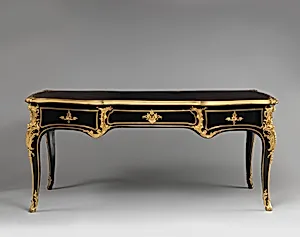
Writing table (bureau plat)
ca. 1745–50
Medium
Veneered on oak with ebony; mounts of chased and gilded bronze; top inlaid with later panels of black morocco and gilt-tooled leather
Dimensions
confirmed: 31 1/2 × 71 7/8 × 36 in. (80 × 182.6 × 91.4 cm)
Classification
Woodwork-Furniture
Culture
French
Department
European Sculpture and Decorative Arts
Museum
Metropolitan Museum of Art, New York, NY
Credit
Bequest of Mrs. Charles Wrightsman, 2019
Accession Number
2019.283.5
Rights
Public Domain
Art Historical Context
This elegant bureau plat, crafted by the renowned French ébéniste Bernard II van Risenburgh around 1745–50, exemplifies the exuberant Rococo style of Louis XV's reign. Van Risenburgh, a master of luxurious furniture from a dynasty of Dutch-origin cabinetmakers in Paris, was celebrated for his intricate designs favored by the French aristocracy. This writing table, with its serpentine apron and cabriole legs, reflects the period's taste for graceful curves, asymmetry, and playful ornamentation, transforming functional furniture into sculptural art. The construction highlights virtuoso techniques: oak veneered with ebony for a rich, dark sheen, accented by chased and gilded bronze mounts that depict floral motifs and mythical creatures, adding a touch of gilded opulence. The top features later inlaid panels of black morocco leather, gilt-tooled for a refined writing surface—a common adaptation for enduring use. Measuring over six feet wide, it was designed for grand salons where diplomacy and correspondence unfolded amid splendor. Bequeathed to the Metropolitan Museum of Art in 2019 by Mrs. Charles Wrightsman, this piece offers a window into 18th-century French elite life, blending craftsmanship, innovation, and cultural prestige in the European Decorative Arts collection.