
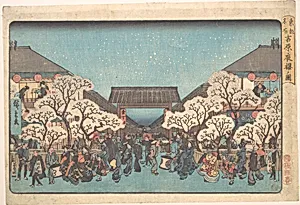
東都名所 吉原夜桜の図|Yoshiwara Yo Zakura no Zu
ca. 1841
Medium
Woodblock print; ink and color on paper
Dimensions
9 13/16 x 14 3/8 in. (24.9 x 36.5 cm)
Classification
Prints
Culture & Period
Japan · Edo period (1615–1868)
Department
Asian Art
Museum
Metropolitan Museum of Art, New York, NY
Credit
Purchase, Joseph Pulitzer Bequest, 1918
Accession Number
JP608
Rights
Public Domain
Tags
Art Historical Context
In the enchanting woodblock print *Yoshiwara Yo Zakura no Zu* (Night Cherry Blossoms atwara), created around 1841 by Utagawa Hiroshige, visitors are transported to Edo-period Japan (1615–1868). This scene captures the lively Yoshiwara pleasure district—Tokyo's famed licensed quarter—under a canopy of blooming cherry trees at night. Elegant women and men stroll amid lanterns and houses, evoking the ephemeral beauty of sakura blossoms, a cherished symbol of life's transience in Japanese culture. Hiroshige, a master of the ukiyo-e ("pictures of the floating world") tradition, excelled at depicting urban scenes and landscapes with poetic atmosphere. Here, his signature style shines through subtle gradients of color and light, suggesting moonlit glows and soft shadows that bring the nocturnal revelry to life. Woodblock printing, using ink and color on paper, allowed for vibrant, mass-produced art that democratized beauty during the prosperous Edo era. Measuring about 10 by 14 inches, this intimate print from the Metropolitan Museum of Art's Asian Art collection highlights Hiroshige's influence on later artists worldwide, from Impressionists like Monet to modern graphic design. A window into Japan's vibrant pleasure culture, it invites reflection on fleeting joys.
About the Artist
Utagawa Hiroshige · 1826–1869
Utagawa Hiroshige (1797–1858), born Andō Tokutarō, was the last great master of Japanese ukiyo-e woodblock printmaking and one of the most influential landscape artists in history. Born in Edo (modern Tokyo) into a low-ranking samurai family serving as fire wardens, Hiroshige transformed landscape printmaking into a poetic meditation on nature, weather, and everyday life. His revolutionary approac...