
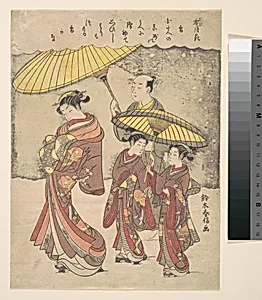
Yuki|雪月花 雪|Snow
ca. 1769
Medium
Woodblock print; ink and color on paper
Dimensions
11 1/8 x 8 3/8 in. (28.3 x 21.3 cm)
Classification
Prints
Culture & Period
Japan · Edo period (1615–1868)
Department
Asian Art
Museum
Metropolitan Museum of Art, New York, NY
Credit
Henry L. Phillips Collection, Bequest of Henry L. Phillips, 1939
Accession Number
JP2774
Rights
Public Domain
Tags
Art Historical Context
Suzuki Harunobu's *Yuki (Snow)*, created around 1769 during Japan's Edo period (1615–1868), the serene beauty of a winter moment in this exquisite woodblock print. As a pioneer of full-color nishiki-e prints—ink and color on paper—Harunobu ukiyo-e, the "floating world" celebrating everyday pleasures, courtesans, and nature. This intimate work, measuring just 11 1/8 x 8 3/8 inches, exemplifies his mastery of subtle gradients and vibrant hues, achieved through collaborative carving and printing techniques that layered colors with precision. The scene evokes the traditional Japanese aesthetic of *setsugekka* (snow, moon, flowers), symbolizing fleeting beauty. Gentle snow falls as men and women huddle under umbrellas, their figures rendered with Harunobu's signature elegance and emotional warmth—often blending romance and quiet poetry. These *bijin-ga* (beautiful women) prints were affordable art for urban Edoites, popular among merchants and samurai alike. Part of the Metropolitan Museum of Art's Henry L. Phillips Collection, this print highlights Harunobu's brief but influential career (1725–1770), bridging single-sheet color printing and the later masterpieces of Hiroshige and Hokusai. A delicate reminder of winter's poetry in Japanese culture.
About the Artist
Suzuki Harunobu · 1725–1770
Suzuki Harunobu (c. 1725-1770) was a Japanese ukiyo-e artist who revolutionized woodblock printing by developing nishiki-e—full-color prints using multiple woodblocks—in 1765. Before Harunobu, Japanese prints were limited to two or three colors; his innovation unleashed the entire artist's palette, transforming ukiyo-e into the vibrant art form that would later captivate Western artists from Manet...