
Yung-Uh-Sho-Na (rattle)
Unknown Artist
19th century
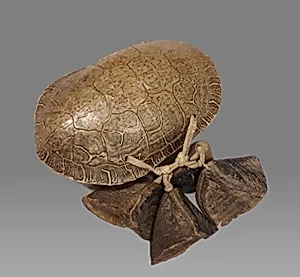
Medium
Turtle shell, buckskin, deer hooves
Dimensions
Overall: 10.2 x 14.6cm (4 x 5 3/4in.)
Classification
Idiophone-Shaken-rattle
Culture
Native American (Hopi)
Department
Musical Instruments
Museum
Metropolitan Museum of Art, New York, NY
Credit
The Crosby Brown Collection of Musical Instruments, 1889
Accession Number
89.4.620
Rights
Public Domain
Art Historical Context
Discover the *Yung-Uh-Sho-Na*, a 19th-century rattle crafted by an unknown Hopi artist, now housed in the Metropolitan Museum of Art Crosby Brown Collection of Musical Instruments. This compact idiophone-shaken rattle, measuring just 4 x 5 3/4 inches, embodies the ingenuity of Hopi craftsmanship from the American Southwest. The Hopi, renowned for their rich ceremonial traditions, used such instruments in dances, rituals, and storytelling, where the rhythmic shaking produced a distinctive, resonant sound evoking nature's pulse. Fashioned from a turtle shell—symbolizing longevity and the earth's dome—bound with buckskin and adorned with deer hooves, the rattle highlights sustainable Native American techniques. The hooves clatter against the shell when shaken, creating a percussive idiom perfect for ensemble performances. Turtle shells were prized for their durability and acoustic qualities, reflecting deep environmental connections in Hopi culture. This artifact offers a window into 19th-century Hopi life, preserving spiritual practices amid rapid cultural changes. Visitors can imagine its lively role in kachina dances, underscoring the Hopi's enduring legacy of harmony between sound, material, and tradition.