
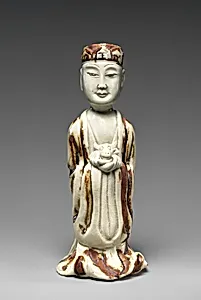
元 褐釉瓷生肖牛俑|Zodiac Figure of an Ox
Unknown Artist
Medium
Glazed stoneware
Dimensions
H. 7 7/8 in. (20 cm); W. 2 3/8 in. (6 cm)
Classification
Tomb Pottery
Culture & Period
China · Yuan dynasty (1271–1368)
Department
Asian Art
Museum
Metropolitan Museum of Art, New York, NY
Credit
Charlotte C. and John C. Weber Collection, Gift of Charlotte C. and John C. Weber, 1994
Accession Number
1994.605.60
Rights
Public Domain
Tags
Art Historical Context
This charming Zodiac Figure of an Ox, in glazed stoneware during China's Yuan dynasty (12711368), stands as a delightful example of tomb pottery, or *mingqi*. Measuring just 7⅞ inches high and 2⅜ inches wide, this brown-glazed (褐釉瓷) figure captures the sturdy form of the ox—the second animal in the Chinese zodiac—with simple yet expressive modeling. Produced for burial in tombs, such pottery served the deceased in the, embodying servants, animals, or guardians that ensured comfort and prosperity beyond death. The Yuan era, under Mongol rule, marked a golden age for Chinese ceramics, blending imperial patronage with innovative glazing techniques on durable stoneware. Brown glazes like this one evoked earthy tones, contrasting with the dynasty's famed blue-and-white porcelain, and highlighted the ox's symbolic role as a emblem of diligence, fertility, and agrarian strength in Chinese culture. Zodiac figures were especially popular in tombs, aligning with cosmological beliefs and the 12-year cycle that structured imperial calendars and daily life. Today, this piece from the Charlotte C. and John C. Weber Collection graces the Metropolitan Museum of Art's Asian Art department, offering visitors a tangible link to Yuan spiritual practices and masterful craftsmanship.