
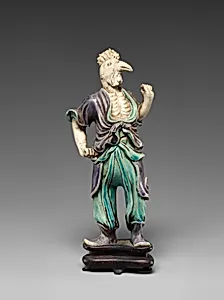
清 素胎彩釉生肖雞俑|Zodiac Figure: Rooster
Unknown Artist
18th century
Medium
Porcelain, in the biscuit and with turquoise and aubergine glazes
Dimensions
H. 6 in. (15.2 cm)
Classification
Ceramics
Culture & Period
China · Qing dynasty (1644–1911)
Department
Asian Art
Museum
Metropolitan Museum of Art, New York, NY
Credit
Gift of Birgit and Peter Morse, in memory of Betty and Sydney Morse, 1992
Accession Number
1992.100.8
Rights
Public Domain
Tags
Art Historical Context
This charming Zodiac Figure: Rooster, crafted in 18th-century Qing dynasty China, captures the spirited essence of the tenth animal in the Chinese zodiac. Standing just 6 inches tall, this porcelain figurine depicts a proud rooster, its form rendered in biscuit porcelain—a matte, unglazed technique prized for its soft, naturalistic texture that mimics unglazed stoneware or jade. Vibrant turquoise and aubergineeggplant-purple) glazes accent key areas, highlighting feathers and features with subtle elegance typical of Qing ceramic artistry. During the Qing era (1644–1911), porcelain production reached extraordinary heights, especially at imperial kilns, where artisans experimented with colored glazes and unglazed bodies to create lifelike figures (known as *yong* or tomb or decorative attendants). Roosters symbolized fidelity, punctuality, and good fortune in Chinese culture, often featured in zodiac sets for homes or altars to invoke prosperity. This piece, with its dynamic pose and restrained palette, exemplifies the period's blend of functionality and whimsy, bridging everyday symbolism with masterful craftsmanship. Today, housed in the Metropolitan Museum of Art's Asian Art department as a gift from Birgit and Peter Morse, it invites visitors to ponder the enduring zodiac traditions that still guide Chinese horoscopes and festivals.