
Zondeval
after 1540 - 1549
Medium
pen
Dimensions
200; 265
Rights
Public Domain
About this artwork
height 200 mm x width 265 mm
Art Historical Context
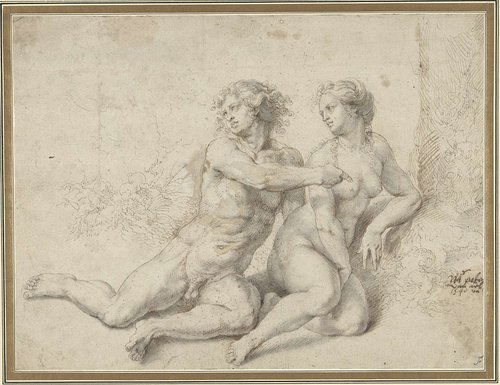
Created by the Flemish artist Pieter Coecke Aelst around 1540–1549, *Zondeval* (The Fall of Man) captures the pivotal biblical moment of Adam and Eve’s expulsion from Eden. Coecke van Aelst, a versatile master active in Antwerp, was renowned for bridging Northern European traditions with the emerging Renaissance styles he encountered during travels to Italy. His works often served as designs for tapestries, stained glass, and prints, spreading Italianate ideals of proportion and classical form throughout the Low Countries. Executed in pen on a modest sheet measuring just 200 by 265 millimeters, this drawing highlights the artist’s confident line work and economical use of hatching to suggest volume and movement. Such preparatory sketches were essential in the 16th century for planning larger commissions, allowing patrons and workshops to visualize compositions before committing to expensive materials like tapestry or panel painting. Today, *Zondeval* offers visitors an intimate glimpse into Coecke van Aelst’s creative process, revealing how Renaissance humanism and biblical storytelling converged in Northern art during a period of religious and cultural transformation.