
Ctrl K
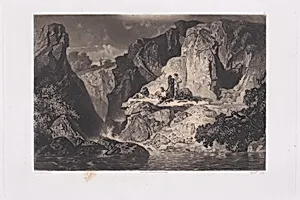
**Jean-Adrien Guignet (also known as Adrien Guignet)** was a French orientalist painter born on January 21, 1816, in Annecy and raised in Autun. He died in Paris on May 19, 1854, at the age of 38. Though details of his formal training remain limited, he emerged as a notable figure in 19th-century French art, particularly admired for his vivid depictions of ancient Egyptian and Near Eastern subjects.
Guignet worked within the Romantic tradition, blending historical and biblical narratives with the exoticism of Orientalism. His paintings often featured dramatic scenes from antiquity, infused with rich colors, atmospheric lighting, and meticulous attention to costume and architecture. He gained popularity for his Egyptian-themed works, which reflected the era’s fascination with the East following Napoleon’s campaigns. A friend of the painter Hippolyte Michaud, Guignet produced both large-scale history paintings and more intimate genre scenes and landscapes.
Among his most recognized works are *Épisode de la retraite des Dix-Mille* (Episode from the Retreat of the Ten Thousand, c. 1842), now in the Louvre, which captures a dramatic moment from Xenophon’s *Anabasis*; *Joseph expliquant les rêves du pharaon* (Joseph Explaining Pharaoh’s Dreams) in Rouen’s Musée des Beaux-Arts; and *Cambise et Psamménite* (Cambyses and Psammetichus) also at the Louvre. Other notable pieces include *Xerxes à l’Hellespont* and his self-portrait, both housed in Autun’s Musée Rolin.
Though his career was cut short, Guignet left a legacy as one of the more accomplished orientalist painters of his generation. His works continue to appear in major French museum collections and auction records, valued for their historical imagination and technical skill. Today he is remembered as a bridge between Romantic history painting and the growing 19th-century interest in Eastern themes.