Ctrl K
1478–1562
**Antonio Salamanca (c. 1479–1562)** was a Spanish-born publisher, print dealer, and engraver who became a central figure in Rome’s vibrant sixteenth-century print market. Born in Salamanca, Spain, he settled in Rome around 1510, where he married the Italian Sigismonda Viccardi and established his business as a bookseller and publisher of prints.
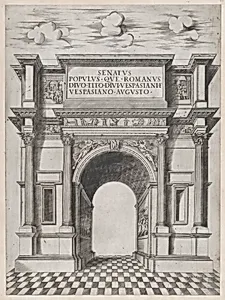
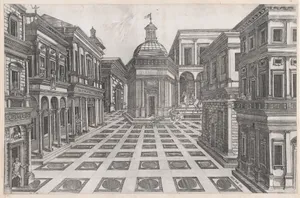
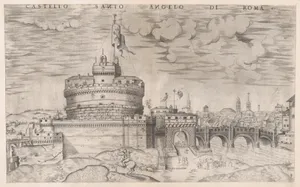
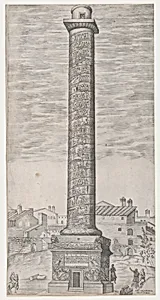
Active from roughly 1517 until his death, Salamanca specialized in reproductive engravings and illustrated books that made classical, mythological, and contemporary subjects widely available. He issued his first major collection of engravings in 1532, featuring mythological scenes after Raphael and other masters. From 1553 he collaborated closely with the French-born publisher Antonio Lafreri, jointly producing maps, city views, and informative broadsheets (avvisi) documenting current events.
Among his notable publications is an engraving of the 1538 sea battle of Preveza and contributions to the illustrated anatomical treatise by Juan Valverde de Amusco, with plates by Nicolas Beatrizet. Many sheets in museum collections carry attributions such as “Anonymous|Antonio Salamanca,” reflecting his dual role as publisher and occasional engraver.
Salamanca’s son Francesco continued the family trade, ensuring the continuation of his father’s enterprise. Through his extensive output of affordable, high-quality prints, Salamanca helped shape the visual culture of Renaissance Rome and facilitated the spread of artistic and scientific knowledge across Europe. His work remains a cornerstone for understanding the early modern print trade.