Ctrl K
**Célestin-François Nanteuil-Lebœuf**, known as Célestin Nanteuil (1813–1873), was a leading French painter, engraver, and illustrator of the Romantic era. Born in Rome on 11 July 1813 to French parents attached to Joseph Bonaparte’s entourage, he returned to France and entered the École des Beaux-Arts in Paris in 1827. There he first studied under Eustache-Hyacinthe Langlois before joining the studio of Dominique Ingres, whose classical rigor he balanced with the expressive freedom of Romanticism.
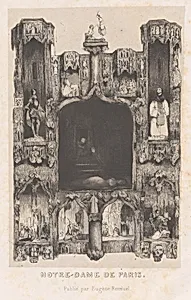
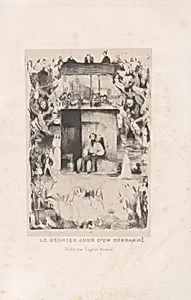
Nanteuil quickly became one of the movement’s most versatile graphic artists. He produced paintings, pastels (including a striking self-portrait of 1830), and especially prints—lithographs, etchings, and book illustrations—that captured the dramatic spirit of Romantic literature. He collaborated closely with publisher Eugène Renduel, creating frontispieces and vignettes for works by Victor Hugo (notably editions of *Notre-Dame de Paris*), Théophile Gautier, Alfred de Musset, and others. His theatrical posters and scene designs, such as those for *La Esmeralda* and *Don César de Bazan*, further extended his influence into the performing arts.
In later life Nanteuil held important institutional posts: appointed Director of the Académie des Beaux-Arts in 1848, he later served as curator of the Musée des Beaux-Arts in Dijon. His elder brother, the sculptor Charles-François Nanteuil-Lebœuf, had earlier won the Prix de Rome in 1817. Nanteuil died on 6 September 1873 in Bourron-Marlotte at the age of sixty.
Today he is remembered as one of the quintessential “imagiers romantiques,” whose vivid illustrations helped shape the visual identity of French Romanticism and whose technical mastery bridged painting, printmaking, and book design. His works remain prized for their energy, literary sensitivity, and enduring contribution to 19th-century graphic art.
All 2 artworks loaded