1847–1898
Félix-Hilaire Buhot was born on July 9, 1847, in Valognes, a small town in Normandy, France, into a modest family—his father a wine merchant and his mother a seller of women's clothes. Orphaned by age seven after losing both parents and his maternal grandmother, he was raised by relatives, including a godfather, and received an early introduction to drawing from his adopted mother's nephew. In 1865, Buhot moved to Paris to study literature at the Lycée Henry IV, but soon pivoted to art, enrolling at the prestigious École des Beaux-Arts in 1866. There, he studied painting and drawing under masters Isidore-Alexandre Augustin Pils, Horace Lecoq de Boisbaudran, and maritime painter Jules Noël of the Barbizon School tradition; he also trained with engraver Léon Gaucherel, a founder of the Société des Aquafortistes.
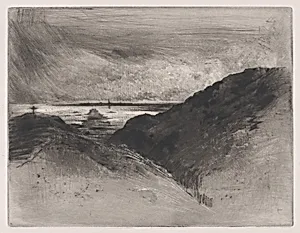
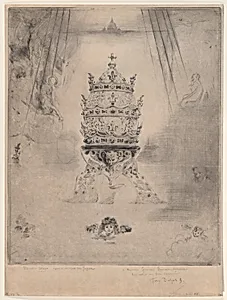
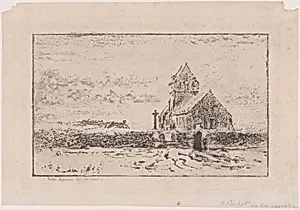
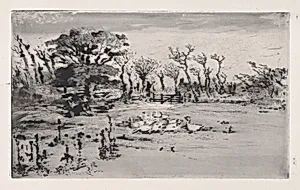
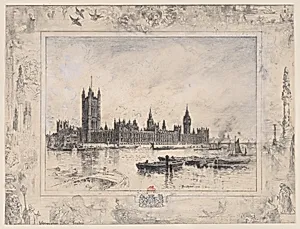
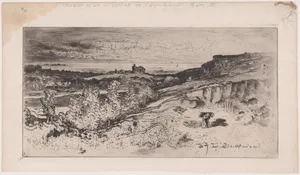
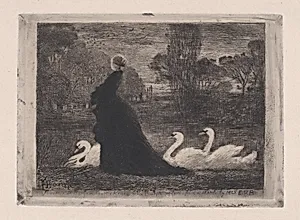
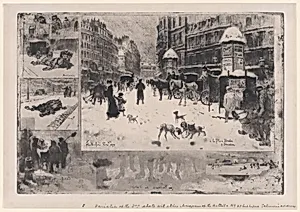
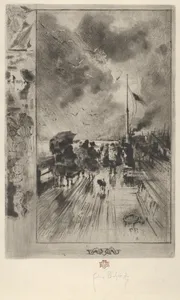
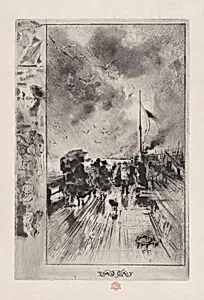
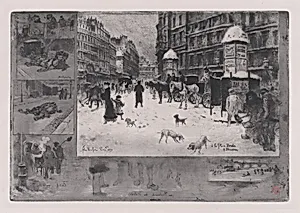
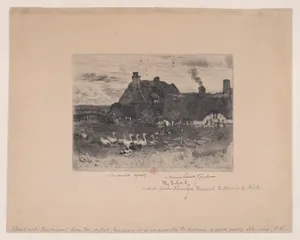
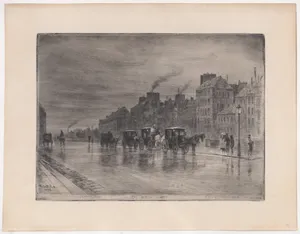
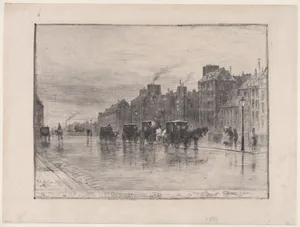
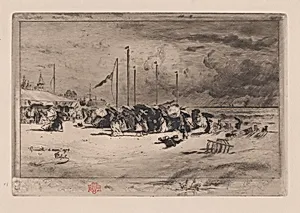
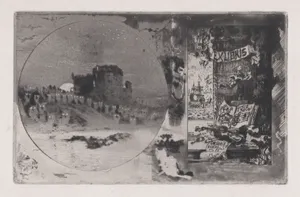
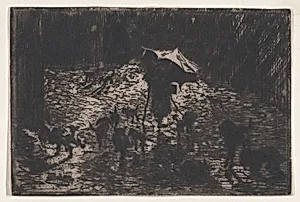
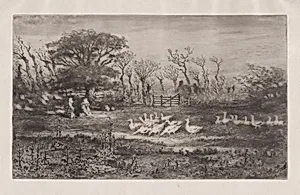
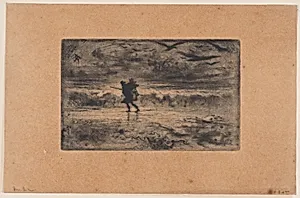
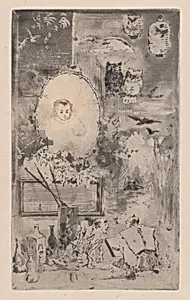
Buhot initially supported himself decorating fans and illustrating sheet music, but his breakthrough came with printmaking. Producing his first etching in 1873, he became a pioneering "peintre-graveur," renowned for experimental techniques that revived seventeenth-century etching methods. Blending etching, aquatint, drypoint, roulette, and engraving, he created painterly "paintings on copper" with multiple states, unique inking, and over 800 paper types, challenging the notion of prints as identical multiples. His signature "marges symphoniques"—decorative vignettes in the margins echoing the central theme—drew from Japanese woodblocks and medieval manuscripts, capturing atmospheric effects like rain, snow, and fog in urban Paris scenes and moody seascapes.
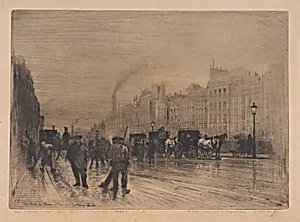
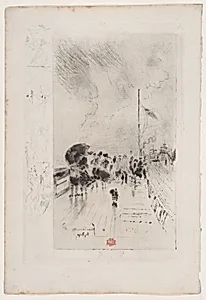
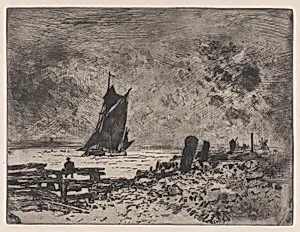
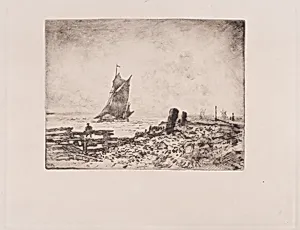
Buhot's major works vividly depict everyday life around his Montmartre studio on Boulevard de Clichy, such as *National Holiday on the Boulevard de Clichy* (1878), *Funeral Procession on the Boulevard de Clichy* (1887), and *Winter in Paris* (1879), alongside *Winter Morning on the Quai de l’Hôtel-Dieu* (1876), *La place Pigalle en 1878* (1878), and English-inspired pieces like *A Pier in England* and *Landing in England* (both 1879). He exhibited successfully at the Salons from 1875 to 1886 and held his first one-man show in New York in 1888, earning acclaim in the U.S. Married to Henriette Johnston since 1881, with whom he had son Jean Buhot, a painter, Buhot ceased printmaking around 1892 amid depression, dying in Paris on April 26, 1898. His innovative legacy endures as one of France's most original nineteenth-century printmakers, collected worldwide for transforming etching into sorcery.