Ctrl K
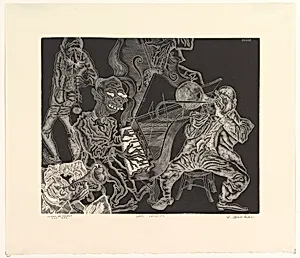
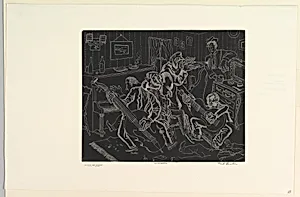
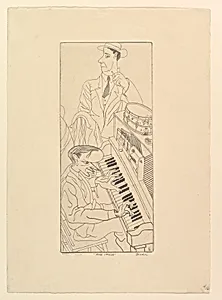
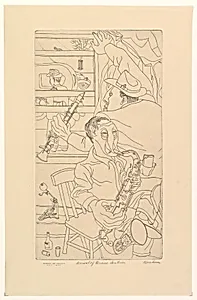
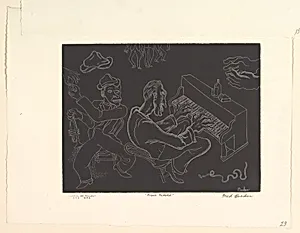
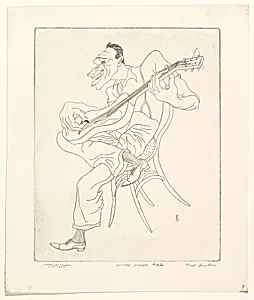
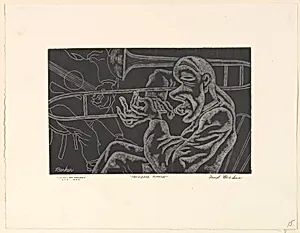
Frederick Gerhard Becker, born on August 5, 1913, in Oakland, California, was the son of silent film actor and director Fred Becker Sr. and grew up immersed in Hollywood's creative milieu, where he honed his drawing skills as a high school illustrator and cartoonist. He began formal training at the Otis Art Institute in Los Angeles from 1931 to 1933, discovering printmaking there. Relocating to New York City in 1933, Becker briefly studied architecture at New York University but shifted focus after studying under instructor Eugene Steinhof, whose classes on form and color at the Beaux-Arts Institute of Design captivated him. In 1935, printmaker Louis Lozowick, impressed by Becker's caricatures of jazz musicians sketched at clubs like Adrian’s Tap Room, enrolled him in the Works Progress Administration's Graphic Arts Division, where he worked until 1939.
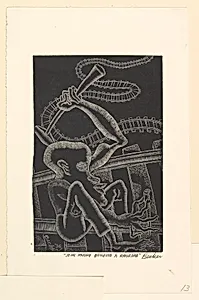
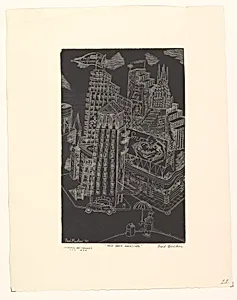
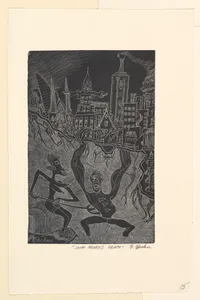
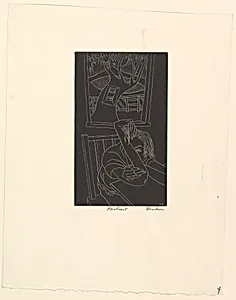
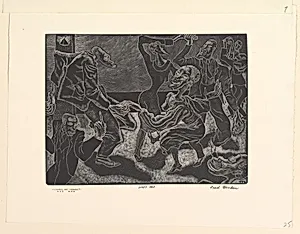
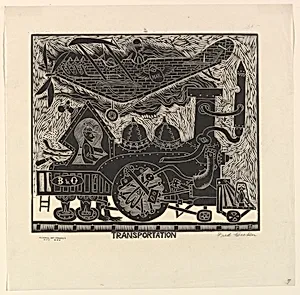
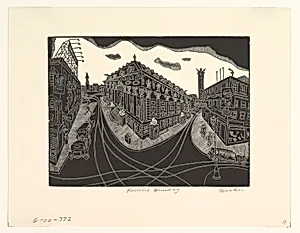
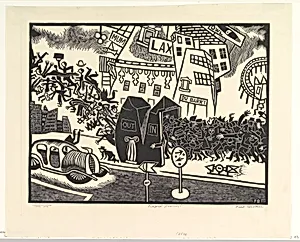
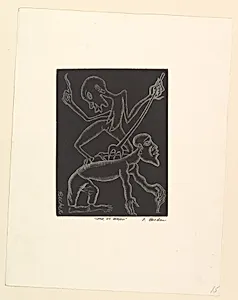
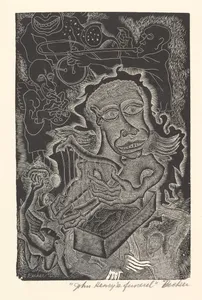
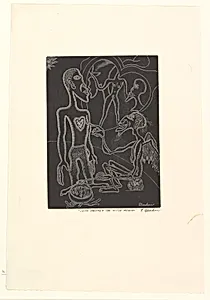
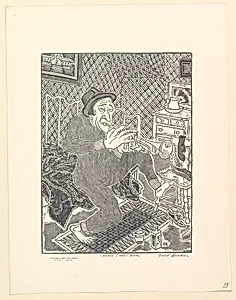
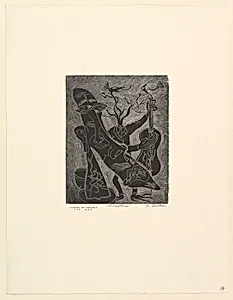
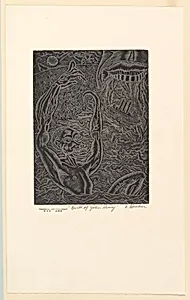
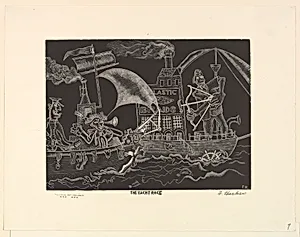
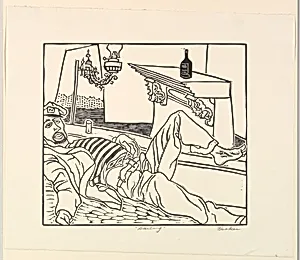
Becker thrived in the WPA, producing dynamic etchings and wood engravings of urban life and social themes, including *John Henry* (1936), *New York Landscape*, *Rapid Transit* (c. 1937), and *Cafeteria*. These earned him solo exhibitions at the Federal Art Project Gallery in 1937 and Willard Gallery in 1938. In 1940, he joined Stanley William Hayter's innovative Atelier 17 studio, experimenting with intaglio and color printing amid Surrealist and Constructivist influences, until World War II interrupted his progress; he worked in defense industries on Long Island before being drafted in 1945.
Returning in 1946, Becker launched his teaching career at Tyler School of Art in Philadelphia, then founded the printmaking department at Washington University in St. Louis (1948–1968), before joining the University of Massachusetts at Amherst (1968–1986). His style evolved from WPA-era social realism and quirky jazz portraits with Surrealist flair to gestural Abstract Expressionism, pioneering experimental techniques in color intaglio. Awards like the Louis Comfort Tiffany Foundation grant (1948), Yaddo residency (1954), and Guggenheim Fellowship (1957, funding a Paris stint at Atelier 17) underscored his innovation.
Becker's prints grace collections at the Metropolitan Museum of Art, Museum of Modern Art, Whitney Museum, National Gallery of Art, and Smithsonian American Art Museum. Retrospectives, such as at the University of Massachusetts Herter Gallery (1999), celebrate his seven-decade legacy as a master printmaker who bridged Depression-era grit with modernist abstraction, shaping generations of artists through his teaching.