Ctrl K
1524–1587
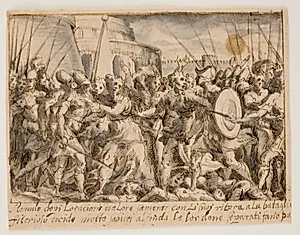
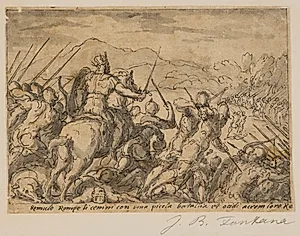
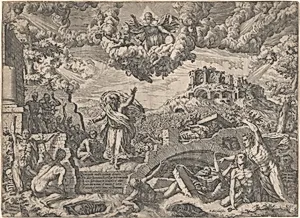
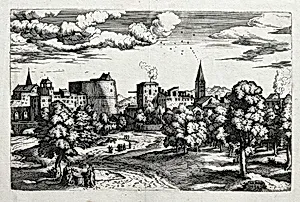
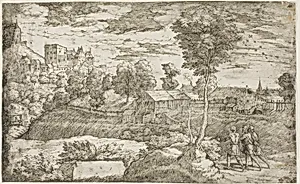
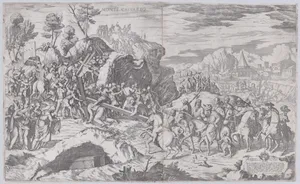
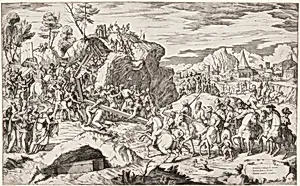
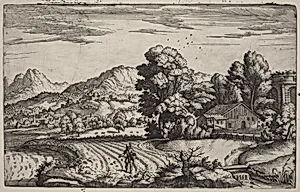
Giovanni Battista Fontana (1524-1587) was an Italian painter and engraver from the Veneto region who achieved his greatest success working for the Habsburg court in Austria. Born at Ala near Verona in 1524 (not Venice as sometimes stated) and dying on September 25, 1587, Fontana's career exemplifies the mobility of skilled artists in the sixteenth century and the importance of aristocratic patronage for artistic success. Fontana's artistic training made use of paintings by Venetian masters including Titian and Veronese, absorbing the coloristic richness and compositional grandeur of the Venetian school. However, his career took him north to the Habsburg territories, where he found important patronage. In 1573, he settled in Innsbruck, and in 1575 he received appointment as court painter to Ferdinand II, Archduke of Austria, a position that provided steady employment and prestigious commissions. His artistic output in Austria, documented from 1562 onwards, included major work on altarpieces for churches, along with countless sketches and engravings. His work as both painter and printmaker allowed him to create monumental religious works while also producing prints that could circulate more widely. His prints occasionally bore dedications to Venetian patrons, suggesting he maintained connections to his Veneto origins even while working in Austria. Works by Fontana are held in major collections including the Metropolitan Museum of Art and the National Gallery of Art, which lists him as "Veronese, c. 1524-1587," referring to his geographic origin near Verona.
Giovanni Battista Fontana was born in 1524 at Ala, a town near Verona in the Veneto region of northern Italy. His artistic training involved studying paintings by the Venetian masters, particularly Titian and Veronese, whose works provided models for composition, color, and monumental figure painting. This Venetian foundation would influence his subsequent work, even after he moved to the Habsburg territories. During this formative period, he developed skills in both painting and engraving, preparing him for a versatile artistic career.
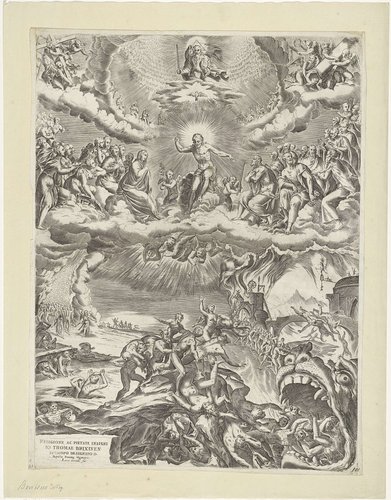
By 1562, Fontana's artistic output in Austria is documented, suggesting he had already begun working in Habsburg territories. In 1573, he settled permanently in Innsbruck, the Tyrolean capital and an important Habsburg residence. In 1575, he received the prestigious appointment as court painter to Ferdinand II, Archduke of Austria, providing stable patronage and access to major commissions. His work for the Habsburg court included significant altarpieces for churches throughout the Austrian territories, combining his Venetian-influenced style with the religious requirements of the Catholic Reformation. Beyond his monumental paintings, he produced numerous sketches and engravings, with at least one print bearing a dedication to a prior in Venice, suggesting maintained connections to his Italian origins. Fontana died on September 25, 1587, having spent approximately twenty-five years serving the Habsburg court and contributing to the artistic culture of Counter-Reformation Austria.
Artheon Research Team
Last updated: 2025-11-09
Biography length: ~488 words