Ctrl K
1692–1768
Giovanni Domenico Ferretti, born on June 15, 1692, in Florence to goldsmith Antonio di Giovanni da Imola and Margherita di Domenico Gori, spent his early years in Imola before returning to his native city for artistic training. He studied painting under Tommaso Redi from 1702 to 1704 and Sebastiano Galeotti in Florence, honing skills in figure composition and fresco technique. In 1710–1712, Ferretti traveled to Bologna to work under Felice Torelli, absorbing Emilian influences that lent solidity to his forms. Resettling in Florence by 1715, he joined the Accademia del Disegno, where he later taught and rose to become one of the Dodici Maestri di Pittura by 1731, eventually serving as Console.
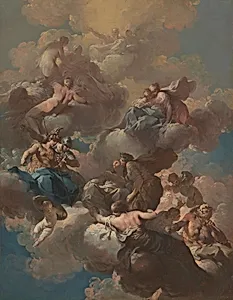
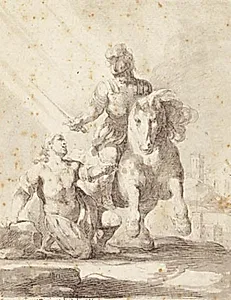
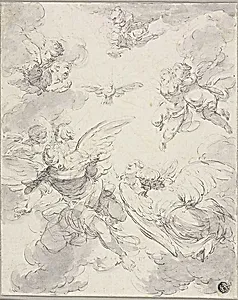
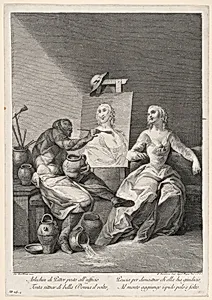
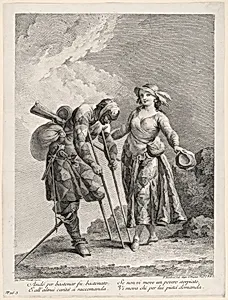
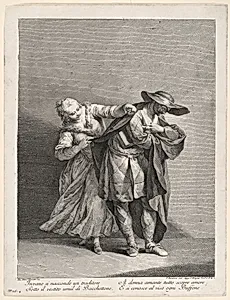
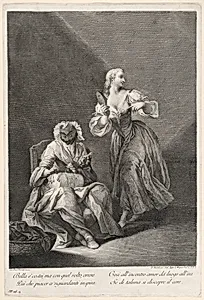
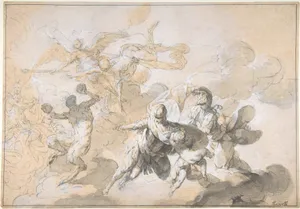
A leading Rococo painter in Tuscany during the early eighteenth century, Ferretti blended Sebastiano Ricci's airy, pastel-hued frescoes with the rhythmic elegance and monumental figures derived from his Emilian masters. His oeuvre spans religious fresco cycles, historical scenes, and secular tapestry designs for the Medici court. Early commissions included the Imola Cathedral cupola decoration (1718–1719) featuring saints John Cassian and Peter Chrysologus, canvases for Impruneta church (1721–1722), and the signed *Ecstasy of Saint Teresa of Avila with Saint Catherine of Siena* (1723, Badia of Castiglion Fiorentino). Masterpieces followed, such as the grand staircase ceiling at Palazzo Amati-Cellesi in Pistoia (1721) and his crowning achievement, the San Prospero e Filippo church frescoes in Pistoia (1731–1746), executed with collaborators like Lorenzo del Moro. He also painted *Death of Saint Joseph* (1741, Florence Cathedral chapel) and a series of lively Commedia dell'arte Harlequin scenes (1742), infused with Giuseppe Crespi's naturalism.
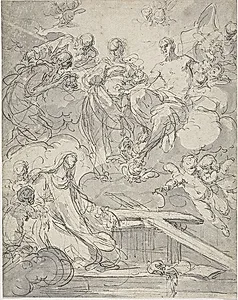
In his later career, Ferretti adorned Santa Maria del Carmine in Florence (1755 onward) with works like *Saint Mary Magdalene de’ Pazzi and Angels*, though most were lost in a 1771 fire, sparing only his *Deposition* canvas. His tapestry cartoons, such as *Water* (from 1728), and portraits further showcased his versatility. Ferretti's legacy endures as Florence's premier settecento frescoist, bridging Baroque monumentality with Rococo grace; his pupils, including Alessandro Masini who finished *Virgin Giving the Scapular to Saint Simeon Stock*, carried forward his elegant style across Tuscany.