Ctrl K
1852–1917
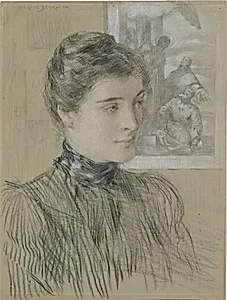
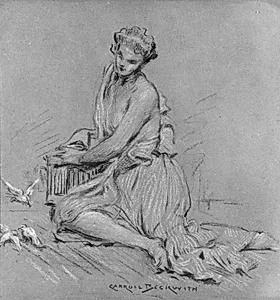
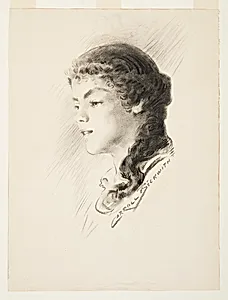
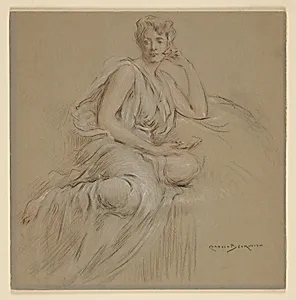
**James Carroll Beckwith (1852–1917)** was an American painter renowned for his portraits, figure studies, and landscapes in a Naturalist style that bridged academic traditions with emerging modern sensibilities. Born in Hannibal, Missouri, he grew up in Chicago, where his family ran a wholesale grocery business. He began his artistic training at the Chicago Academy of Design in 1868 under Walter Shirlaw, but the Great Chicago Fire of 1871 destroyed the school and much of his early work.
Beckwith continued his studies at the National Academy of Design in New York under Lemuel Wilmarth before traveling to Paris in 1873. There he trained in drawing with Adolphe Yvon and painting under the influential Carolus-Duran, who selected him (alongside John Singer Sargent) to assist on a mural for the Palais du Luxembourg. He returned to the United States in 1878 and quickly established himself as both an artist and educator, teaching at the Art Students League of New York from 1878 to 1882 and again in 1886–1887; among his students was Violet Oakley.
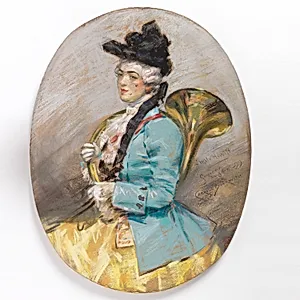
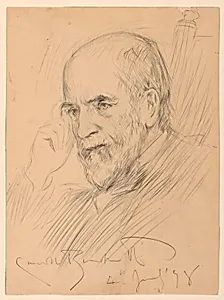
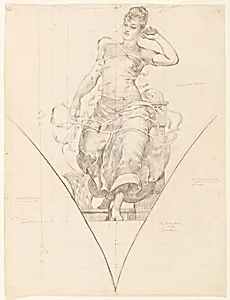
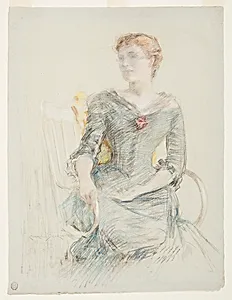
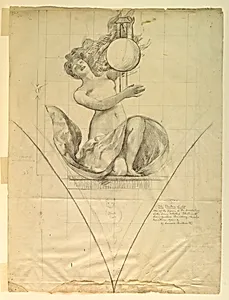
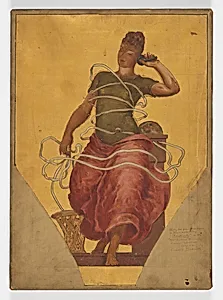
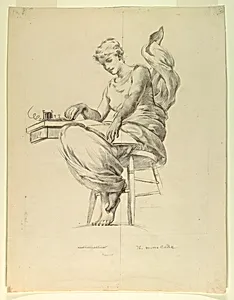
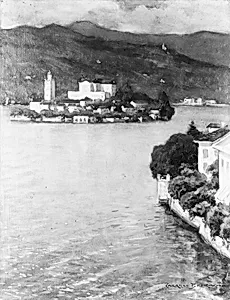
Beckwith concentrated on portraits and detailed renderings of historical subjects while maintaining an interest in decorative and mural work. Notable portraits include those of William Merritt Chase (1882), Mark Twain, Theodore Roosevelt, and especially his acclaimed 1886 likeness of William M. Walton, which earned him recognition at the 1899 Paris Exposition. He also created murals for the 1893 World’s Columbian Exposition and spent time in Italy from 1910 to 1914 painting en plein air studies of monuments and landscapes. He married Bertha Hall in 1887; Sargent presented the couple with a Venetian watercolor as a wedding gift.
Beckwith received numerous awards, including medals at the Atlanta (1895), Paris (1899), and Charleston (1902) expositions, and he actively promoted American art through organizations such as the Fine Arts Society and the National Free Art League. His papers and diaries, spanning 1871 to 1917, are preserved at the National Academy of Design. He died of a heart attack in New York City on October 24, 1917. Today his work is held in major collections, reflecting his lasting contribution to late-nineteenth- and early-twentieth-century American painting.