1750–1824
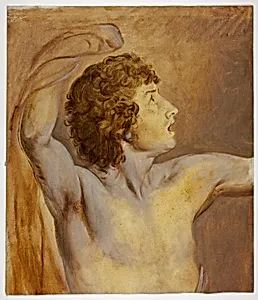
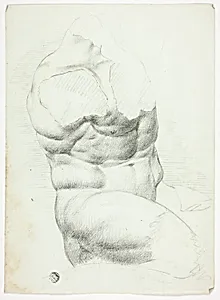
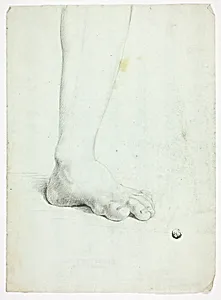
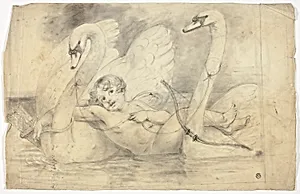
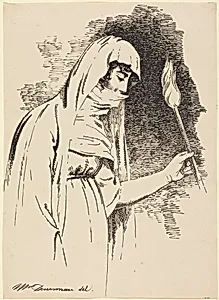
John Downman (1750–1824) was born in Ruabon, near Wrexham, in North Wales. His artistic inclinations proved stronger than any legal ambitions his family held for him, and he began his formal training in Liverpool before enrolling in 1769 among the first intake of students at the newly established Royal Academy Schools in London. There he studied under Benjamin West. In 1773, Downman deepened his education by travelling to Italy alongside the celebrated Joseph Wright of Derby, absorbing the classical tradition that shaped so many painters of his generation.
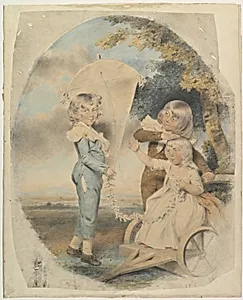
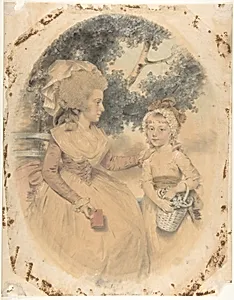
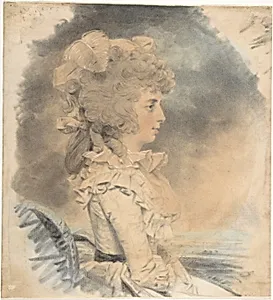
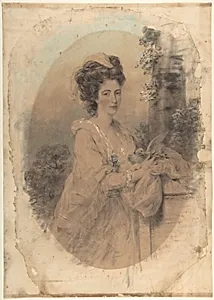
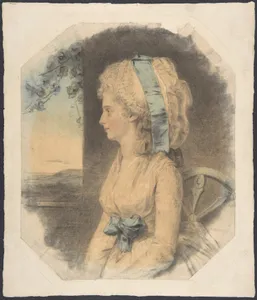
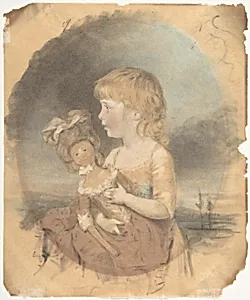
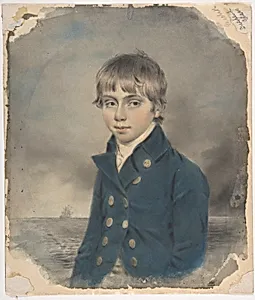
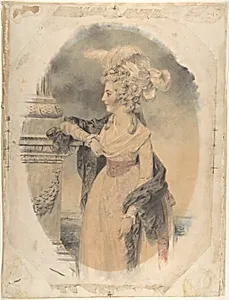
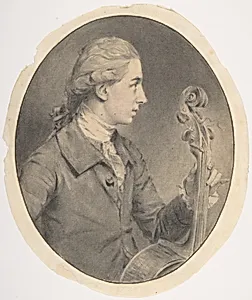
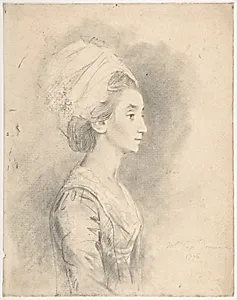
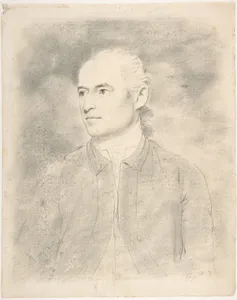
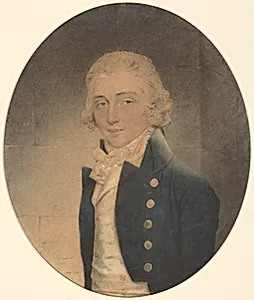
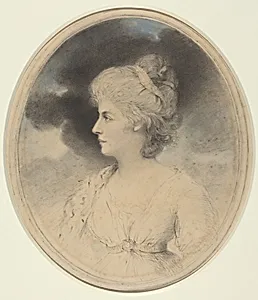
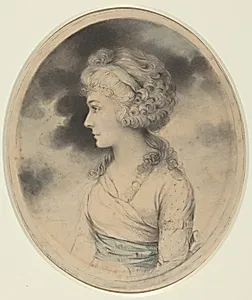
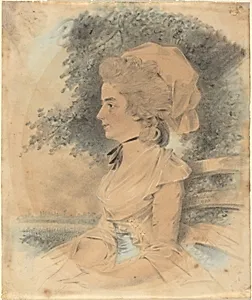
Downman's distinctive place in British art rests on a technique he perfected from the 1780s onward, when he largely abandoned oil painting in favour of a subtler and more intimate approach. Working in black chalk and graphite over thin wove paper, he applied delicate tints of watercolour to the reverse of the sheet, allowing flesh tones to glow softly through from behind — a quiet luminosity that gave his sitters an almost ethereal quality. This method was both efficient and reproducible: a sitting required only a few hours, and Downman kept careful albums of "first studies" from which additional versions could be produced.
His client list reflected the very peak of fashionable society. Downman was patronised by the royal family, by the Duchess of Devonshire, and by the Duchess of Richmond, and he was particularly celebrated for his lively, tender portrayals of children. Between 1769 and 1819 he exhibited 148 works at the Royal Academy. He was elected an Associate of the Royal Academy in 1795. He died on 24 December 1824.
Downman's legacy is one of exquisite refinement rather than grand ambition. A large collection of his portrait drawings is held at the Fitzwilliam Museum in Cambridge, which devoted a dedicated exhibition to his work in 1996. His portraits endure as vivid, intimate records of Georgian society — faces caught with warmth and economy, preserved in the softest possible light.