
Ctrl K
1384–1460
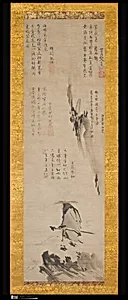
**Kyūen Ryūchin (died 1498)** was a Japanese Zen monk and calligrapher active during the Muromachi period (1392–1573). He is best known today for his poetic inscription on the hanging scroll *Su Shi (Dongpo) in a Bamboo Hat and Clogs*, now in the collection of The Metropolitan Museum of Art.
Like many Zen monks of his era, Kyūen contributed to the rich tradition of adding Chinese-style poems (*shisho*) to ink paintings, bridging visual art and literature. The scroll depicts the beloved Chinese scholar-official Su Shi (Su Dongpo, 1037–1101) trudging through rain in peasant attire during exile. Kyūen’s inscription, along with those by four fellow monks—Zuigan Ryūsei (1384–1460), Nankō Sōgen (1378–1463), Kōshi Ehō (1414–ca. 1465), and Chikkō Zengo (died after 1464)—celebrates Su Shi’s resilience and wit.
These inscriptions reflect the deep admiration for Chinese literati culture among medieval Japanese Zen communities, particularly in Kyoto monasteries. The painting itself, executed in ink on paper before 1460, exemplifies the spare, expressive *suiboku* (ink-wash) style favored in Zen circles. Kyūen’s contribution, dated to the late fifteenth century, extends the work’s dialogue across generations.
Though details of his early life and training remain undocumented, Kyūen’s participation in this collaborative masterpiece underscores the vital role of Zen monks as poets, calligraphers, and cultural intermediaries. His inscription helps preserve the enduring appeal of Su Shi’s story in Japan, illustrating how Muromachi-period artists and monks wove Chinese heritage into Japanese artistic identity. Today, the scroll stands as a testament to this cross-cultural exchange and the poetic voice of Zen monks like Kyūen Ryūchin.
All 1 artworks loaded