Ctrl K
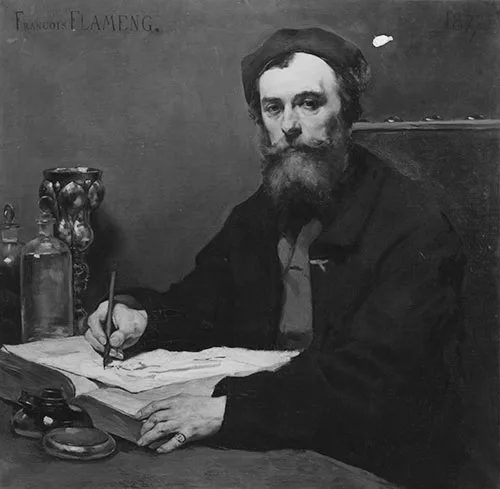
1831–1911
Léopold Flameng (1831–1911) was one of the most accomplished and influential French engravers of the 19th century, whose exceptional technical mastery and artistic sensitivity made him the preeminent interpreter of paintings by old and modern masters through the medium of engraving. Born in Brussels on November 22, 1831, to French parents, and dying at Courgent, near Paris, on September 5, 1911, Flameng's career spanned eight decades of profound transformation in European visual culture—from the final flowering of Romantic art through Realism and Impressionism to the threshold of Modernism. Throughout these changes, Flameng maintained dedication to the traditional craft of engraving, elevating it to unprecedented heights of technical refinement and artistic achievement. Flameng's artistic formation in Paris under Luigi Calamatta and Jean Gigoux provided him with rigorous training in the demanding techniques of line engraving and etching. His exceptional talent was recognized early by Charles Blanc, the influential art critic, historian, and administrator who recruited Flameng for the newly founded Gazette des Beaux-Arts in 1859. This association with France's most prestigious art journal, where Flameng's collaboration with fellow engraver Léon Gaucherel produced over one hundred illustrations, established his reputation and provided crucial exposure to the art world's elite. Flameng's mastery encompassed the entire history of Western painting. He created celebrated engravings after works by Jan van Eyck, Leonardo da Vinci, Rembrandt, Ingres, and Delacroix, demonstrating his ability to translate paintings across different schools, periods, and styles into the black-and-white medium of engraving while preserving their essential character. His work served not merely as mechanical reproduction but as interpretive recreation, requiring deep understanding of each artist's particular qualities. Recognition of his achievements culminated in the Gold Medal at the Universal Exhibition of 1878 and election to the prestigious Académie des Beaux-Arts in 1898. As a noted teacher of both painting and engraving, Flameng influenced the next generation, including his son François Flameng (1856–1923), who became a successful painter in his own right.
Léopold Flameng was born on November 22, 1831, in Brussels, though his parents were French. This dual connection to French and Belgian culture would characterize his career, as he worked primarily in Paris while maintaining ties to Belgian artistic circles.
Brussels in the 1830s was the capital of the recently independent Kingdom of Belgium (established 1830) and a thriving artistic center. However, Flameng's family relocated to Paris, where he would receive his artistic education and spend his career.
Flameng began his artistic studies in Paris with two distinguished masters. Luigi Calamatta (1801–1869) was an Italian engraver who had settled in Paris and become one of the most respected practitioners of line engraving. From Calamatta, Flameng learned the rigorous technical disciplines of burin engraving—the precise control required to incise clean, expressive lines into copper plates, the management of parallel and cross-hatched lines to create tonal gradations, and the interpretive skills needed to translate paintings into prints.
His second teacher, Jean Gigoux (1806–1894), was a painter and lithographer associated with the Romantic movement. From Gigoux, Flameng gained understanding of painting technique, composition, and the particular qualities of different artists' styles—knowledge essential for creating engravings that captured not merely the outlines but the spirit of painted originals.
Throughout the 1840s and 1850s, Flameng developed his technical mastery while beginning to establish his professional reputation. The mid-19th century was a complex moment for reproductive engraving: photography, invented in 1839, was beginning to challenge engraving's documentary functions, yet demand for high-quality art reproductions remained strong, as engravings could be printed in multiple copies and disseminated far more widely than paintings.
The decisive moment in Flameng's career came in 1859 when Charles Blanc (1813–1882), the influential art critic, historian, and administrator, recruited him for the newly founded Gazette des Beaux-Arts. Blanc, who served as Director of Fine Arts and would become a member of the Académie Française, was launching what would become France's most prestigious art journal, and he needed skilled reproductive engravers who could work rapidly while maintaining high quality.
Blanc had identified a crucial need: the Gazette des Beaux-Arts would feature articles on art history and contemporary art that required illustrations of high quality. Photography could not yet be successfully integrated into periodical printing, so engravings remained essential for reproducing artworks in publications.
Flameng's collaboration with fellow engraver Léon Gaucherel in the Gazette des Beaux-Arts and in another prominent periodical, L'Artiste, proved exceptionally productive. Together and individually, they produced over one hundred illustrations for these publications, exposing Flameng's work to the art world's most sophisticated audience.
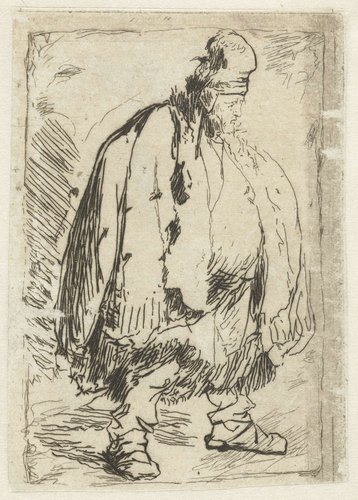
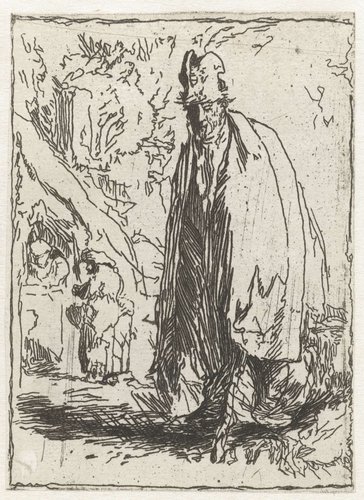
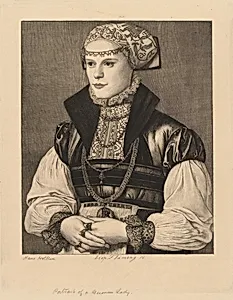
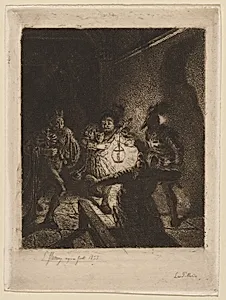
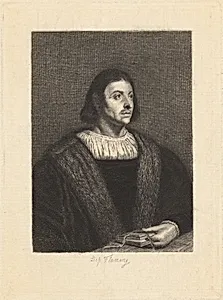
During these years, Flameng created engravings after masterpieces from across European art history. His work after Jan van Eyck required capturing the minutely detailed naturalism and jewel-like color of early Netherlandish painting. His engravings after Rembrandt demanded understanding of dramatic chiaroscuro and expressive brushwork. Translating Delacroix required conveying Romantic dynamism and color harmonies through black and white. Each artist presented unique interpretive challenges.
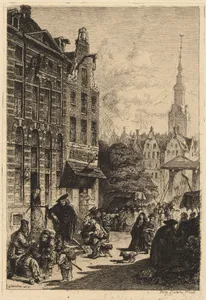
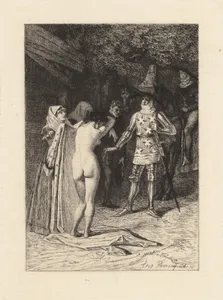
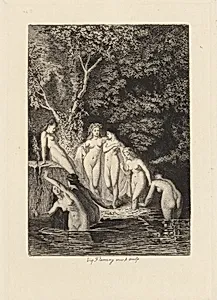
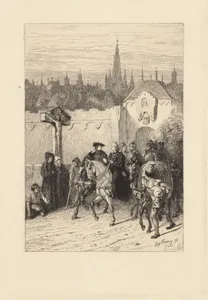
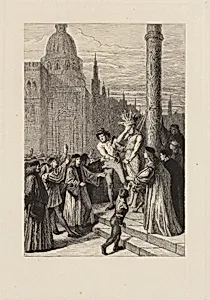
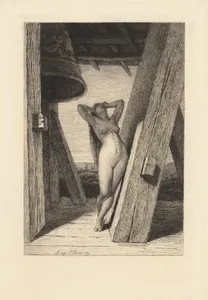
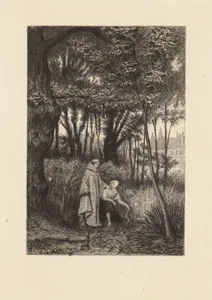
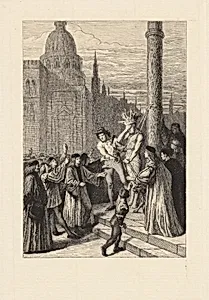
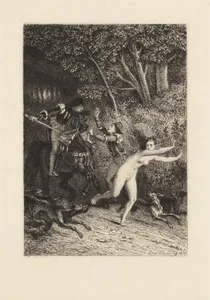
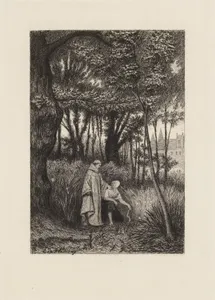
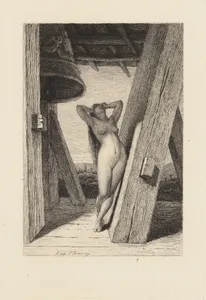
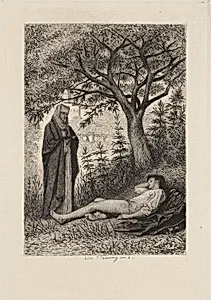
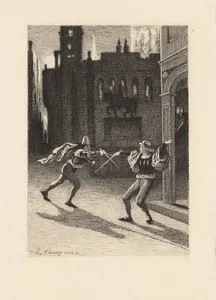
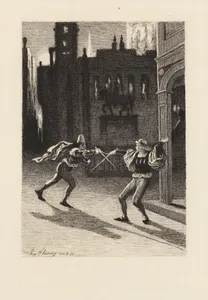
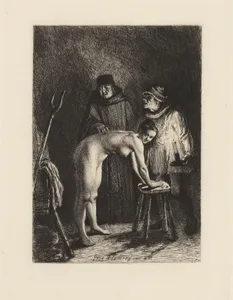
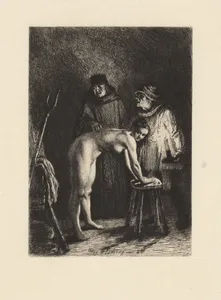
Flameng also illustrated several important books on Paris and numerous literary works by classical and contemporary authors, including Boccaccio, Paul Scarron, Victor Hugo, and François Coppée. These literary illustrations demonstrated his versatility and his ability to create original compositions inspired by texts as well as reproducing existing paintings.
His reputation grew steadily through the 1860s and 1870s. Collectors, museums, and publishers sought his services. His engravings were recognized not as mere utilitarian reproductions but as works of art in their own right, demonstrating interpretive intelligence and technical virtuosity.
The Universal Exhibition of 1878 in Paris, a massive international exposition showcasing industrial and artistic achievements, brought Flameng perhaps his greatest official recognition. He was awarded the Gold Medal for engraving, placing him among the most distinguished artists in France.
This period saw Flameng at the height of his powers and reputation. He continued creating engravings after masterpieces while also engaging in teaching. His pedagogical activities encompassed both painting and engraving, demonstrating his comprehensive artistic knowledge and his commitment to transmitting traditional skills to younger generations.
Flameng's engravings after Ingres captured that master's linear precision and idealized forms. His works after old masters demonstrated deep historical knowledge and sensitivity to different artistic traditions. He was recognized as perhaps the finest interpretive engraver of his generation.
The pinnacle of official recognition came in 1898 when Flameng was elected a member of the Académie des Beaux-Arts, one of the five academies constituting the Institut de France. Election to the Académie represented the highest honor available to French artists, recognizing lifetime achievement and placing Flameng among the artistic elite.
At age sixty-seven when elected to the Académie, Flameng had achieved everything possible in his profession. Yet he continued working and teaching, maintaining his commitment to engraving even as photomechanical reproduction was increasingly replacing hand-engraving for commercial purposes.
From 1817 to 1837, Flameng exhibited regularly at the Paris Salon, the official annual exhibition that remained central to French artistic life. His continued Salon participation into his final years demonstrated his sustained productivity and relevance.
During these final years, Flameng witnessed dramatic changes in the art world. The Impressionist and Post-Impressionist revolutions had transformed painting. New technologies were changing image reproduction. Yet Flameng maintained his dedication to traditional engraving, arguing for its continued artistic value beyond mere reproduction.
His son, François Flameng (1856–1923), had become a successful painter, exhibiting at the Salon and receiving official commissions. This continuation of artistic achievement into the next generation must have provided satisfaction, demonstrating that Flameng's dedication to art had created a genuine artistic dynasty.
As a noted teacher, Flameng influenced numerous younger artists, transmitting not merely technical skills but also deep understanding of art history and the interpretive dimensions of reproductive engraving. His students carried forward his standards of excellence even as the profession itself was being transformed by technological change.
Léopold Flameng died on September 5, 1911, at Courgent, near Paris, at age seventy-nine. His death came just three years before World War I would shatter the European cultural world in which he had flourished. He represented the culmination of a tradition of reproductive engraving that stretched back to the Renaissance, elevated to unprecedented technical and artistic heights.
Artheon Research Team
Last updated: 2025-11-09
Biography length: ~1,680 words