Ctrl K
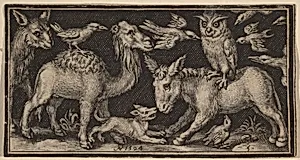
1571–1656
Nicolaes de Bruyn was a Flemish printmaker born in Antwerp in 1571, active during the late sixteenth and early seventeenth centuries and known primarily for his large, elaborately detailed engravings of landscapes, hunting scenes, and biblical and mythological subjects. He trained in the tradition of Flemish reproductive engraving and was deeply influenced by the work of his contemporaries and predecessors in the Antwerp publishing world, a city that in his youth was the center of the European print trade. He later settled in Amsterdam, where he continued to produce prints for the expanding market of the Dutch Golden Age.
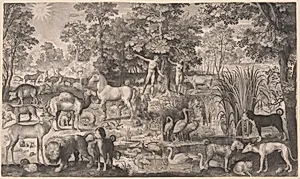
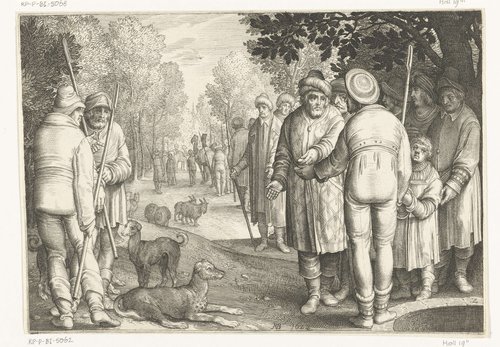
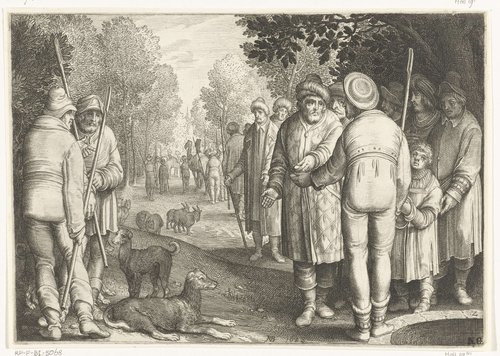
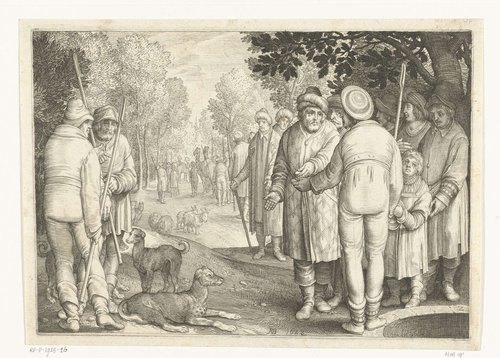
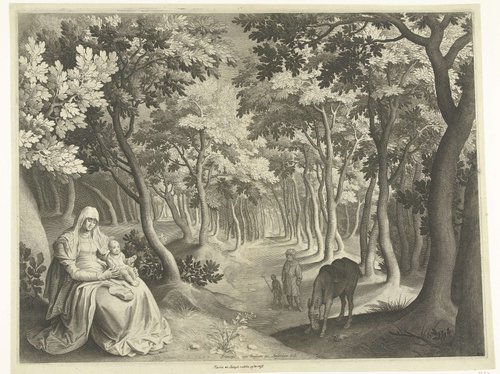
De Bruyn's engravings are distinguished by their ambitious scale and their dense, intricate handling of foliage, animals, and atmospheric landscape. His forest scenes in particular are notable for the way they conjure a sense of deep, shadowed woodland, populated with hunters, wild animals, and mythological figures in a manner that owes something to the Flemish tradition of world landscape initiated by Joachim Patinir and developed by artists such as Gillis van Coninxloo. His prints were published in series and enjoyed wide distribution, reaching collectors across Europe.
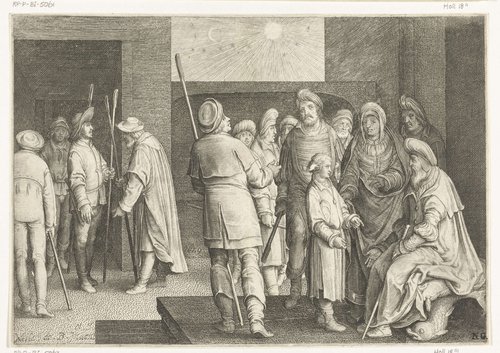
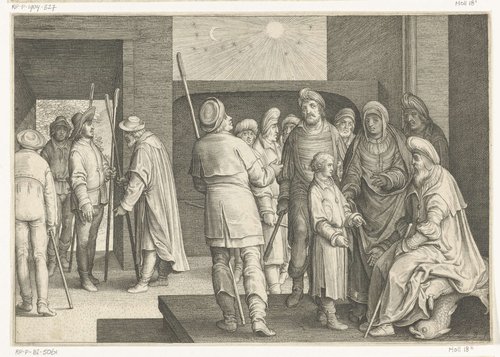
Among the subjects that recur in his work are hunting scenes — stag hunts, boar hunts, and hawking parties — which catered to the tastes of aristocratic and patrician collectors for whom the hunt was a central ceremonial activity. He also produced prints after designs by other artists, placing him within the tradition of the reproductive engraver who served as a disseminator of compositions originating in painting or drawing.
De Bruyn died in Amsterdam around 1652. His prints, produced in substantial numbers and distributed widely through the publishing networks of the Low Countries, exercised a meaningful influence on the imagery of landscape and hunting in the Northern European tradition. Today his large-format engravings are held in print rooms across Europe and America, valued for their technical ambition and their vivid evocation of the wild landscape as a theater of human activity.