Ctrl K
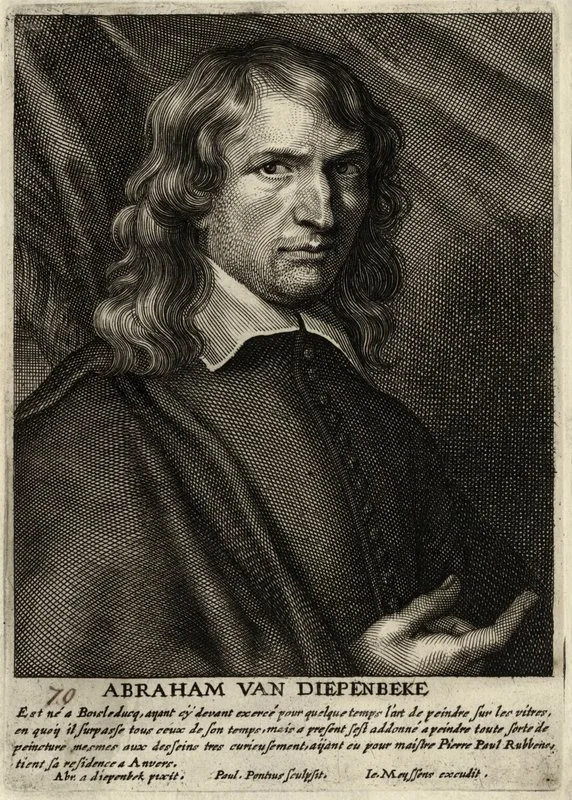
1596–1675
Abraham Jansz. van Diepenbeeck was baptised on 9 May 1596 in ’s-Hertogenbosch in the Habsburg Netherlands, the son of the glass painter Jan Roelofsz. van Diepenbeeck, under whom he studied and trained in the family craft. After his father’s death in 1620 he left for Antwerp, registering in 1622–23 as a glass painter with the Guild of Saint Luke. Although the early biographer Arnold Houbraken claimed a period of study in Italy, modern scholarship regards this as unconfirmed; van Diepenbeeck’s documented formation remained rooted in his father’s workshop and the vibrant artistic milieu of Antwerp.
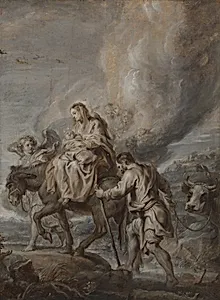
In Antwerp he developed a close working relationship with the workshop of Peter Paul Rubens, collaborating on tapestry cartoons such as those for The Adoration of the Eucharist around 1626–27 and producing drawings on Rubens’s instructions, including a frontispiece for a Plantin Press publication in 1627. Around 1632 Rubens even dispatched him to France to copy frescoes by Primaticcio and Nicolò dell’Abate. Van Diepenbeeck’s own style, which emerged fully in the 1630s when he began creating monumental paintings, was shaped by Rubens and Anthony van Dyck; he treated religious, mythological and historical subjects with the dynamic composition and rich colour typical of Flemish Baroque. He became a master painter in the guild in 1638–39 and, despite personal reluctance and later disputes, served as dean in 1642–43.
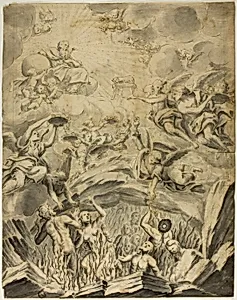
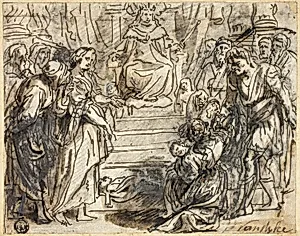
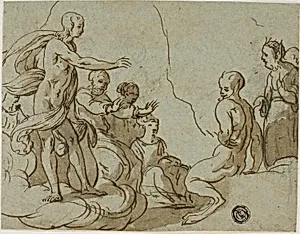
His most enduring contributions lie in design rather than easel painting. He created stained-glass windows for Antwerp Cathedral (the Acts of Mercy) and Saint Paul’s Church (scenes from the Life of Saint Paul), as well as eighteen windows for the Carmelite monastery at Boxmeer depicting Eucharistic themes and monastic history. He also supplied numerous designs for prints and book illustrations, among them forty-nine plates for Michel de Marolles’s Tableaux du Temple des Muses, and later concentrated on tapestry cartoons. Surviving paintings and oil sketches reveal a versatile artist equally at home with portraits, allegories and large-scale narrative scenes.
Van Diepenbeeck married twice and fathered children who continued the artistic tradition; his daughter Johanna Marie wed the painter Joris van Bredael, while two sons became painters. He trained several pupils, including Franchoys Muntsaerts and Jan Pauwels. Though he encountered professional friction with the guild, his prolific output as designer, glass painter and occasional history painter secured his place among the second generation of Antwerp Rubenists. He died in Antwerp in 1675, leaving a body of work that illustrates the collaborative, multi-media character of Flemish Baroque art.