Ctrl K
1840–1882
Alexander Gardner was born on 17 October 1821 in Paisley, Renfrewshire, Scotland, and came of age in a culture shaped by radical social thought. Influenced by the cooperative ideals of Robert Owen, Gardner initially apprenticed as a jeweler and harbored dreams of founding a utopian community in America. His encounter with photography changed the course of his life. After seeing Mathew Brady's celebrated photographs at the Great Exhibition in London in 1851, Gardner recognized the medium's extraordinary potential and resolved to pursue it. He emigrated to the United States in 1856 and soon joined Brady's operation, becoming the manager of Brady's Washington, D.C. studio in 1858 and rapidly distinguishing himself as one of the most technically skilled photographers in the country.
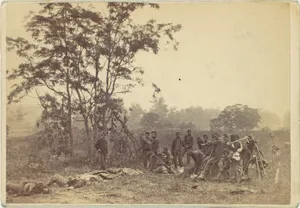
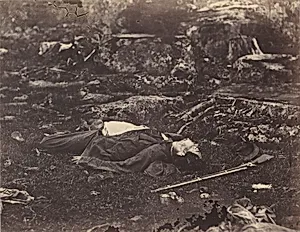
The American Civil War became the defining subject of Gardner's career. He received an honorary rank of captain and was granted access to the front lines, where he documented the conflict with unprecedented directness. His photographs of the battlefield at Antietam in September 1862 — taken in the war's immediate aftermath — were among the first images to confront the American public with the unvarnished reality of mass death. In 1863 Gardner parted ways with Brady and established his own studio with his brother James, where he continued his war documentation. He photographed the aftermath of the Battle of Gettysburg and multiple portraits of President Abraham Lincoln, as well as the conspirators in Lincoln's assassination and their subsequent execution. In 1866 he published Gardner's Photographic Sketch Book of the Civil War, a two-volume set containing 100 hand-mounted original prints.
Gardner's legacy rests on his conviction that photography could serve as both historical record and moral witness. His images brought the human cost of war into parlors and public spaces, forcing viewers to reckon with what conflict truly looked like. In 1867 he became the official photographer for the Union Pacific Railroad, documenting the westward expansion of the nation he had adopted. He gave up photography around 1871, turning to insurance, and died in Washington on 10 December 1882. His Sketch Book endures as one of the most important documents in the history of American photography.
![[Thaddeus Stevens Lying in State in the Rotunda of the Capitol at Washington]](https://images.artheonmuseum.org/met/ph/thumb/thaddeus-stevens-lying-in-state-in-the-rotunda-of-the-capitol-at-washington-286388.webp)
![[Grand Army Review, Washington]](https://images.artheonmuseum.org/met/ph/thumb/grand-army-review-washington-294726.webp)
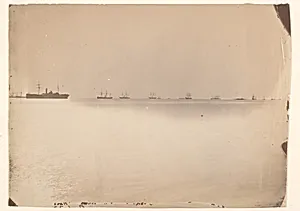
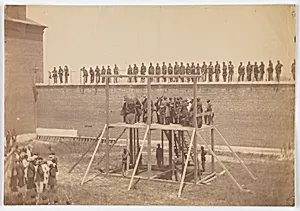
![[Grand Army Review, Pennsylvania Avenue, Washington]](https://images.artheonmuseum.org/met/ph/thumb/grand-army-review-pennsylvania-avenue-washington-283204.webp)
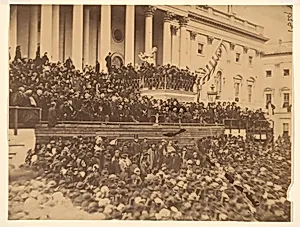
![[Grand Army Review, Pennsylvania Avenue, Washington]](https://images.artheonmuseum.org/met/ph/thumb/grand-army-review-pennsylvania-avenue-washington-294725.webp)
![[Interior View of the Ballroom for Lincoln's Second Inaugural Ball]](https://images.artheonmuseum.org/met/ph/thumb/interior-view-of-the-ballroom-for-lincoln-s-second-inaugural-ball-285806.webp)
![[Grand Army Review, Washington, D.C.]](https://images.artheonmuseum.org/met/ph/thumb/grand-army-review-washington-d-c-294721.webp)
![[Grand Army Review, Washington, D.C.]](https://images.artheonmuseum.org/met/ph/thumb/grand-army-review-washington-d-c-294722.webp)
![[Grand Army Review, Washington, D.C.]](https://images.artheonmuseum.org/met/ph/thumb/grand-army-review-washington-d-c-294723.webp)
![[Grand Army Review, Washington, D.C.]](https://images.artheonmuseum.org/met/ph/thumb/grand-army-review-washington-d-c-294724.webp)
![[Grand Army Review, Washington, D.C.]](https://images.artheonmuseum.org/met/ph/thumb/grand-army-review-washington-d-c-285846.webp)
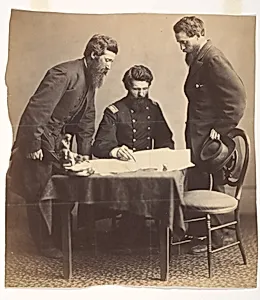
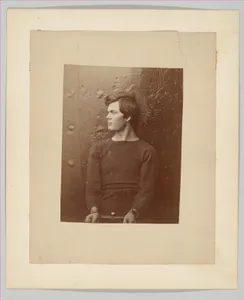
![Lewis Powell [alias Lewis Payne]](https://images.artheonmuseum.org/met/ph/thumb/lewis-powell-alias-lewis-payne-283201.webp)
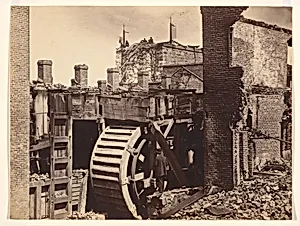
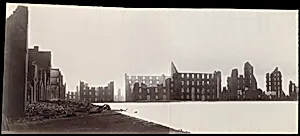
![[Ruins of the State Arsenal from the Canal, Richmond, Virginia]](https://images.artheonmuseum.org/met/ph/thumb/ruins-of-the-state-arsenal-from-the-canal-richmond-virginia-830967.webp)