Ctrl K
1521–1576
Alfonso Ruspagiari, born in Reggio Emilia in 1521 and active there until his death in 1576, was a distinguished Italian Renaissance medalist and wax modeler renowned for his exquisitely detailed portrait medals. Working in the Emilian tradition, he crafted small-scale bronze and lead reliefs that captured the likenesses of local nobility and court figures with a painterly finesse and Mannerist charm. His early life is not well documented, with no records of formal training or mentors, though his mature style reflects the refined portraiture of the period.
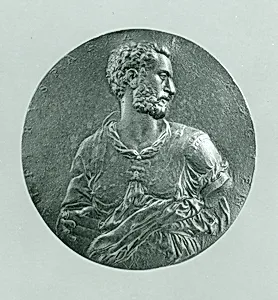
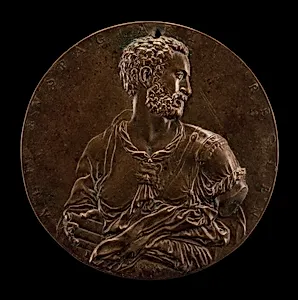
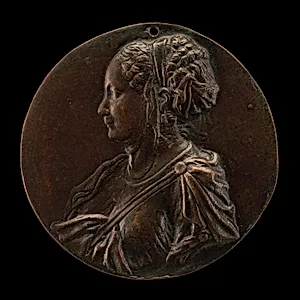
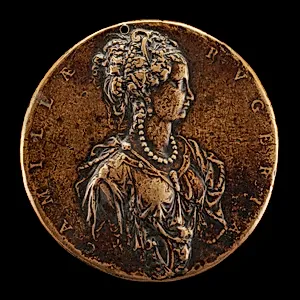
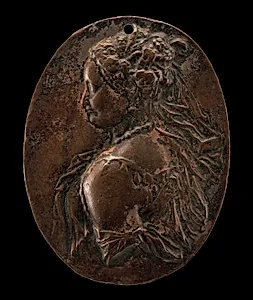
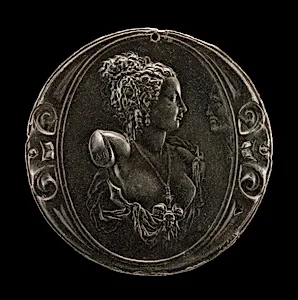
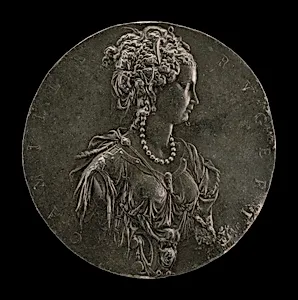
Ruspagiari's career peaked in the mid-to-late 16th century, culminating in his appointment as superintendent of the Reggio Emilia mint in 1571. This role likely inspired his iconic *Self-Portrait* medal (modeled ca. 1566 or 1571), a bronze piece depicting him frontally with head turned left, holding a syrinx, its reverse incused for a tactile, sculptural effect. Among his major works are the *Portrait of a Woman and an Onlooker* (ca. 1550, lead alloy), *Camilla Ruggieri* (late 16th century, bronze and lead versions), *Portrait of a Woman* (late 16th century, lead), *Lucia Ruspagiari (?)* (third quarter 16th century, bronze), and a medal of painter Alessandro Ardenti (pre-1576). These pieces, often hollow-cast in lead or patinated bronze, showcase intricate facial expressions, elaborate attire, and psychological depth, transforming flat medals into intimate vignettes.
As a pivotal figure in Emilian medal-making, Ruspagiari served as the first master to painter Raffaellino da Reggio, imparting skills in portraiture and modeling. His innovative compositions, such as adapting a Lelio Orsi drawing into his self-portrait to evoke Platonic androgyny, influenced later artists like Antonio Abondio. Today, his medals grace collections at the National Gallery of Art, Metropolitan Museum of Art, and Frick Collection, underscoring his enduring legacy as one of the most sought-after medallists of his era, bridging sculpture and Renaissance portraiture in miniature form.