
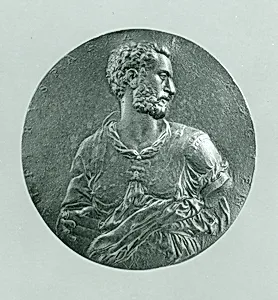
Medal: Self-portrait
model ca. 1566 or 1571 (cast 18th or 19th century)
Medium
Bronze (Copper alloy with chocolate brown patina).
Dimensions
Diam. 7.8 cm, wt. 119.31 g.
Classification
Medals
Department
Robert Lehman Collection
Museum
Metropolitan Museum of Art, New York, NY
Credit
Robert Lehman Collection, 1975
Accession Number
1975.1.1313
Rights
Public Domain
Tags
Art Historical Context
Behold the *Medal: Self-port* by Alfonso Ruspagiari a captivating Renaissance gem modeled around 1566 or 1571 and cast in bronze during the 18th or 19th century. This copper-alloy piece, measuring 7.8 cm in and weighing a substantial 119.31 grams, boasts a rich chocolate-brown patina that speaks to its enduring allure. Housed in the Robert Lehman at The Metropolitan Museum of Art, exemplifies the artistry of medal-making, a favored medium for personal expression in 16th-century Europe. Ruspagiari, an Italian medallist, crafted this self-portrait to showcase his mastery of the form—miniature sculptures that blended sculpture, engraving, and portraiture. Renaissance medals like this one served as portable prestige objects, akin to calling cards for artists and patrons, often celebrating individual identity amid the era's humanist ideals. The obverse likely features Ruspagiari's likeness, highlighting his skill in capturing personality in low relief, while the reverse might bear symbolic motifs, though details vary by cast. This later casting preserves the original model's legacy, inviting us to ponder the artist's gaze across centuries. A testament to technical precision and self-reflection, it reminds visitors of the Renaissance artist's bold self-promotion in an age of innovation. (198 words)
About the Artist
Alfonso Ruspagiari · 1521–1576
Alfonso Ruspagiari, born in Reggio Emilia in 1521 and active there until his death in 1576, was a distinguished Italian Renaissance medalist and wax modeler renowned for his exquisitely detailed portrait medals. Working in the Emilian tradition, he crafted small-scale bronze and lead reliefs that captured the likenesses of local nobility and court figures with a painterly finesse and Mannerist cha...