Ctrl K
1839–1899
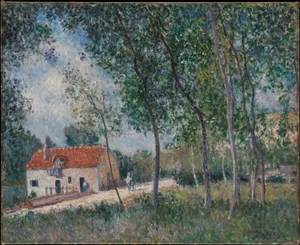
Alfred Sisley (1839–1899) was a British-born French Impressionist landscape painter who remained the most consistently devoted to pure Impressionist principles throughout his career. Born in Paris to prosperous English parents, he studied at the atelier of Charles Gleyre alongside Claude Monet, Pierre-Auguste Renoir, and Frédéric Bazille, forming friendships that placed him at the heart of the emerging Impressionist movement.
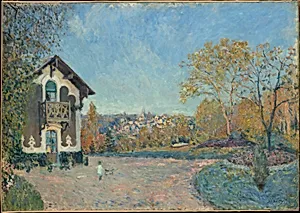
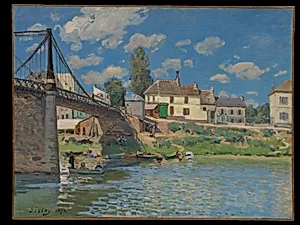
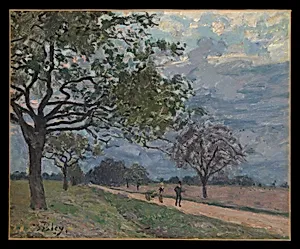
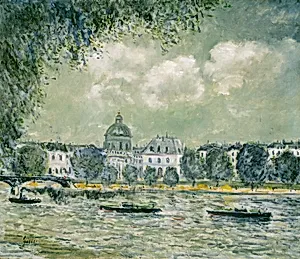
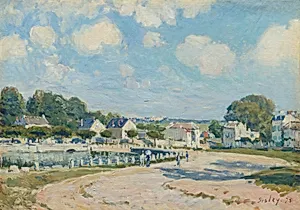
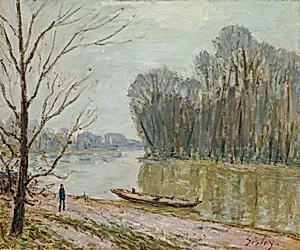
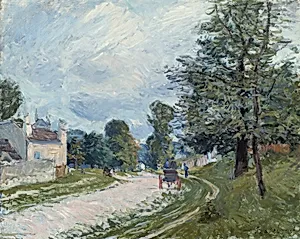
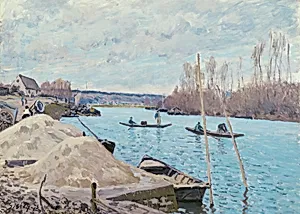
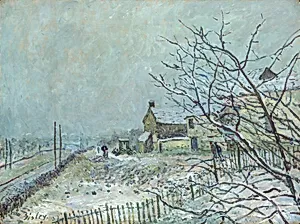
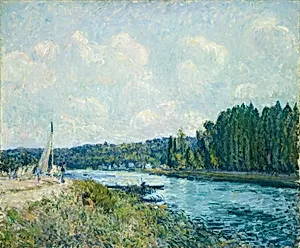
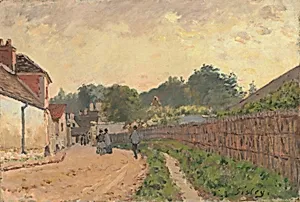
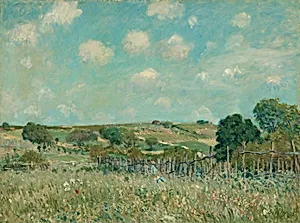
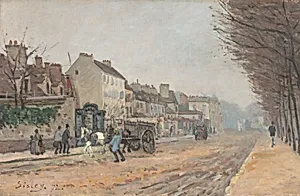
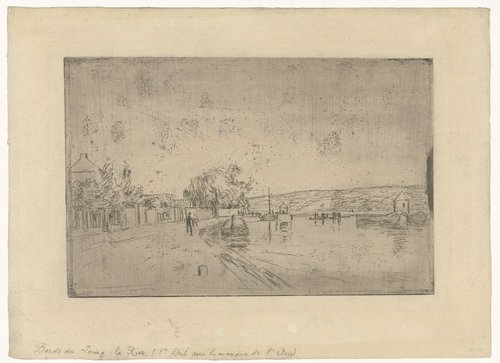
Sisley's art was devoted almost exclusively to landscape painting, particularly the scenery of the Île-de-France — the villages, rivers, canals, and skies of the countryside around Paris. His paintings of Louveciennes, Marly-le-Roi, Moret-sur-Loing, and the Seine and its tributaries capture the subtle, ever-changing effects of weather, season, and light with a sensitivity and poetic delicacy that distinguish his work from the bolder experiments of Monet or the more structured compositions of Pissarro.
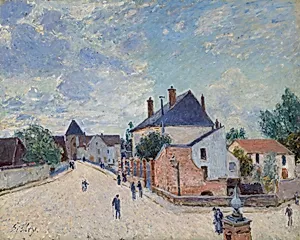
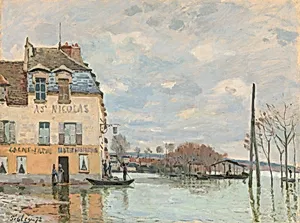
His most celebrated paintings include the series depicting the flood at Port-Marly (1876), where the rising waters transform the village into a shimmering expanse of sky and water, and his many views of the Loing canal and the medieval town of Moret-sur-Loing, where he settled in 1880 and spent the remainder of his life. These works demonstrate his mastery of atmospheric effects and his ability to find infinite variety in familiar, modest subjects.
Despite participating in four of the eight Impressionist exhibitions, Sisley never achieved the commercial success of his colleagues and died in near-poverty. Posthumous recognition came rapidly; his paintings now command high prices and are held by the Musée d'Orsay, the National Gallery in London, the Art Institute of Chicago, the Metropolitan Museum of Art, and the Courtauld Gallery.