Ctrl K
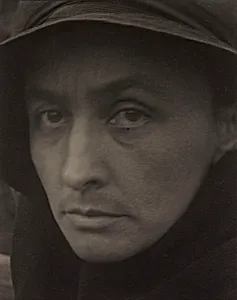
1864–1946
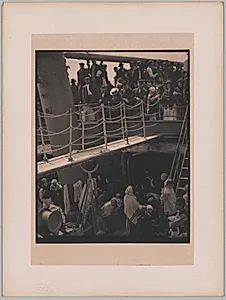
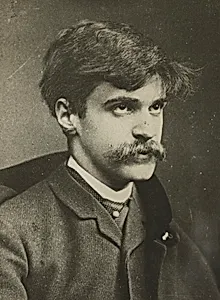
Alfred Stieglitz (1864-1946) was a pioneering American photographer, art dealer, publisher, and advocate for the Modernist movement who was instrumental over his 50-year career in making photography an accepted art form. Born in Hoboken, New Jersey, to German Jewish immigrant parents, Stieglitz spent his formative years studying mechanical engineering in Berlin, where he discovered photography in 1882 and dedicated himself to elevating the medium to fine art status. Few individuals have exerted as strong an influence on 20th-century American art and culture as this visionary photographer and gallerist. Returning to New York in 1890, Stieglitz became the driving force behind the Photo-Secession movement, founded in 1902 to promote photography as fine art. He established a series of influential galleries—Gallery 291 (1905-1917), The Intimate Gallery (1925-1929), and An American Place (1929-1946)—that not only showcased pioneering artistic photography but also introduced American audiences to avant-garde European artists including Henri Matisse, Paul Cézanne, Pablo Picasso, and Constantin Brâncuși. Through his groundbreaking quarterly journal Camera Work (1903-1917), featuring exquisite hand-pulled photogravures and critical essays, Stieglitz championed both the Pictorialist aesthetic and the emerging straight photography movement. His own photographic work evolved from atmospheric, painterly images like 'The Terminal' (1893) to the revolutionary modernist composition 'The Steerage' (1907), and culminated in the abstract 'Equivalents' cloud studies (1922-1934), which are recognized as among the first completely abstract photographic works of art. Stieglitz's personal life was deeply intertwined with his artistic vision. His tumultuous first marriage to Emmeline Obermeyer (1893-1924) gave him a daughter, Kitty, who became a frequent photographic subject. In 1916, he met the artist Georgia O'Keeffe, who became his muse, collaborator, and eventual wife. Over twenty years, Stieglitz created more than 300 intimate portraits of O'Keeffe, establishing one of the most significant artist-muse relationships in American art history. His legacy endures through his photographs, held in major institutions including the Metropolitan Museum of Art, Museum of Modern Art, and National Gallery of Art, and through his unparalleled contributions to establishing photography as a legitimate art form and introducing modern art to America. Stieglitz continued working until 1937 when failing health forced him to stop photographing, and he died on July 13, 1946, at age 82.
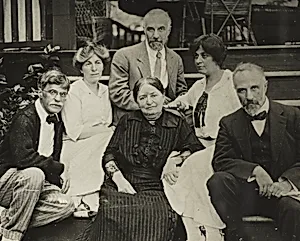
Alfred Stieglitz was born on January 1, 1864, in Hoboken, New Jersey, the first son of German Jewish immigrants Edward Stieglitz (1833-1909), a prosperous wool merchant and former Union Army lieutenant, and Hedwig Ann Werner (1845-1922). His father had emigrated from Germany in 1849 and built a comfortable fortune in the clothing business, providing the family with an upper-middle-class lifestyle. Alfred grew up with five siblings: Flora, twins Julius and Leopold, Agnes, and Selma. In 1871, the elder Stieglitz moved the family from Hoboken to Manhattan's Upper East Side, where young Alfred was exposed to the cultural riches of New York City.
In 1881, Edward Stieglitz sold his company for $400,000 and moved his family to Europe so that his children would receive a superior education. The 17-year-old Alfred enrolled in the Real Gymnasium in Karlsruhe, Germany, and the following year began studying mechanical engineering at the Technische Hochschule in Berlin. A transformative moment came when he enrolled in a chemistry class taught by Hermann Wilhelm Vogel, a scientist and researcher working on the chemical processes for developing photographs. In Vogel, Stieglitz found both the academic challenge he needed and an outlet for his growing artistic and cultural interests. Although studying engineering, Stieglitz purchased his first camera in 1882 and began photographing vistas of the German countryside. By 1884, when his parents returned to America, the 20-year-old Stieglitz remained in Germany, immersing himself in photography and collecting books on photographers in Europe and the United States. During these formative years abroad, he won his first major recognition when his photograph 'The Last Joke, Bellagio' took first place in Amateur Photographer magazine in 1887. Though he would have preferred to remain in Germany, Stieglitz returned to New York in 1890, determined to prove that photography was a medium as capable of artistic expression as painting or sculpture.
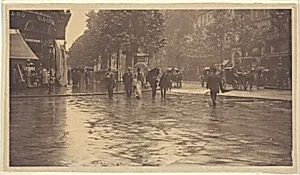
Upon returning to New York in 1890, Stieglitz faced the challenge of establishing himself in a society that viewed photography primarily as a mechanical process rather than an art form. He joined the Society of Amateur Photographers and began creating atmospheric images of New York City streets that would define early Pictorialist photography in America. Stieglitz purchased his first handheld 5x4 camera and produced iconic works such as 'The Terminal' (1893), an evocative study of a horse-drawn tram in the snow, and 'Winter – Fifth Avenue,' both capturing the moody, atmospheric qualities of urban life. These images demonstrated his commitment to Pictorialism, an international movement that aimed to elevate photography to fine art status through soft focus, careful composition, and romantic subject matter designed to make photographs resemble paintings.
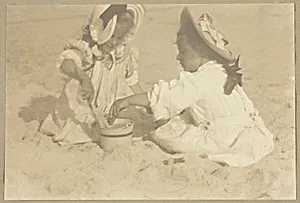
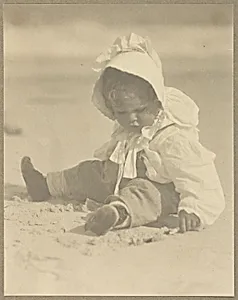
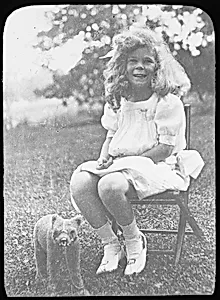
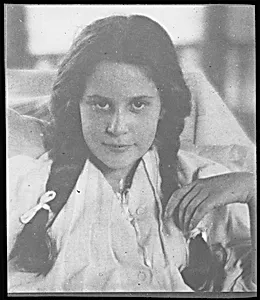
On November 16, 1893, the 29-year-old Stieglitz married 20-year-old Emmeline Obermeyer, the daughter of a successful Brooklyn brewer and sister of his close friend Joe Obermeyer. The marriage proved troubled from the start; Stieglitz later wrote that he did not love Emmy and that she did not share his artistic and cultural interests. Nevertheless, the union produced their only child, Katherine (Kitty), born in 1898, who would become a frequent subject of her father's pioneering photographic experiments documenting infancy, childhood, and early adolescence. Financial support from both families' allowances meant Stieglitz did not have to work for a living, allowing him to dedicate himself fully to photography. During the 1890s, he experimented with various Pictorialist techniques including platinum printing and photogravure, which allowed for wide tonal ranges and rich textures. He also became increasingly frustrated with the conservative attitudes of American photographic societies, setting the stage for his revolutionary work in the new century.
In 1902, Stieglitz founded the Photo-Secession, a radical and controversial movement that proved influential in promoting photography as a fine art. The Photo-Secessionists viewed photography not merely as a documenting tool but as a new means of expression and creation, whereby images could be manipulated to achieve a subjective artistic vision. This group of American photographers, organized around the common interest of elevating photography's place in the art world and regular exhibition of work, included talented practitioners such as Edward Steichen, Gertrude Käsebier, Clarence H. White, and Alvin Langdon Coburn. Stieglitz became the movement's leader and chief advocate, promoting Photo-Secessionist ideals through exhibitions and publications.
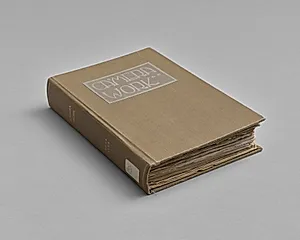
To further the agenda of the Photo-Secession, Stieglitz launched Camera Work in January 1903, a quarterly photographic journal that would become one of the most beautiful and influential art publications ever produced. Each issue contained exquisite hand-pulled photogravures rendered with such quality that they were virtually indistinguishable from original prints, along with critical writings on photography and commentaries on photographers and exhibitions. The journal ran until 1917, publishing 50 issues that documented the evolution of photographic aesthetics. In a significant shift, the January 1910 issue (number 29) included four caricatures by Mexican artist Marius de Zayas, marking Stieglitz's abandonment of his policy of reproducing only photographic images. From this point forward, Camera Work would include reproductions of and articles on modern painting, drawing, and aesthetics, reflecting Stieglitz's expanding role as a promoter of all modern art forms.
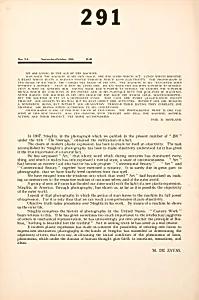
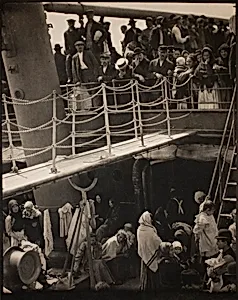
In 1905, Stieglitz, in association with photographer Edward J. Steichen, opened the Little Galleries of the Photo-Secession in Steichen's former studio at 291 Fifth Avenue in Manhattan, a space that would become known simply as '291.' The gallery opened on November 25, 1905, with an exhibition of one hundred prints by thirty-nine photographers. While initially dedicated to art photography, Gallery 291 achieved recognition for two major accomplishments: first, its exhibitions helped bring art photography to the same stature in America as painting and sculpture, with pioneering artistic photographers gaining critical recognition through shows at the gallery. Equally important, with the advice of Steichen, Marius de Zayas, and Max Weber, Stieglitz used this space to introduce American audiences to the most avant-garde European artists of the time, presenting the first American exhibitions of Henri Matisse and Auguste Rodin (1908), Paul Cézanne (1910), Pablo Picasso (1911), and later Constantin Brâncuși, Marcel Duchamp, and Francis Picabia. A pivotal moment in Stieglitz's own artistic development came with his creation of 'The Steerage' in 1907, a photograph that marked his shift toward a more modernist approach and is considered a masterpiece of early modern photography. Unlike soft-focus Pictorialist images, it engaged directly with the modern world in a clear, realistic style, its geometric composition making it one of the first great modernist photographs. The image first appeared in Camera Work in 1911, the same year Stieglitz organized Picasso's first solo show in America. With the dissolution of the Photo-Secession, the end of Camera Work, and the uncertainty brought by the United States' entry into World War I, Gallery 291 became increasingly unsustainable, and Stieglitz closed it in 1917.
In 1916, when Stieglitz was 52 and at a crossroads both personally and professionally, his life was transformed by his encounter with the work and person of Georgia O'Keeffe, then a 29-year-old unknown artist working as an art teacher in Texas. A mutual acquaintance, Anita Pollitzer, showed Stieglitz a selection of O'Keeffe's radical charcoal drawings. Deeply impressed, Stieglitz included O'Keeffe in her first group show at Gallery 291 in May 1916, marking the beginning of one of the most significant artistic partnerships in American art history. Despite Stieglitz's marriage to Emmeline and their 23-year age difference, O'Keeffe and Stieglitz found themselves swept into a tumultuous relationship that escalated quickly in passion and artistic productivity.
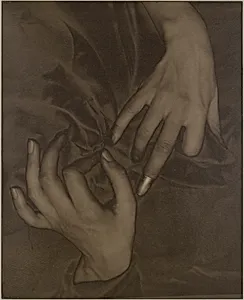
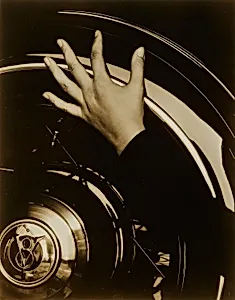
The two began an avid, often daily correspondence that evolved into a passionate affair. O'Keeffe quickly became Stieglitz's primary muse, and he began photographing her 'with a kind of heat and excitement.' Over the next twenty years, he would create more than 300 portraits of her—nude and clothed, performing mundane tasks and posing dramatically in front of her paintings—establishing one of the most extensive and intimate photographic portrait series ever created. In 1921, Stieglitz exhibited 45 photographs of O'Keeffe, including several nudes, creating a sensation with the public and critics. These images remain among his most celebrated works; eight of the nine highest prices ever paid at auction for Stieglitz photographs (as of 2008) were images of O'Keeffe, with a 1919 palladium print of 'Georgia O'Keeffe – Hands' realizing $1.47 million in February 2006.
After Emmeline threw Stieglitz out of their house in 1918 upon discovering him photographing O'Keeffe, he filed for divorce, though he could not extricate himself from the marriage until September 9, 1924. Stieglitz and O'Keeffe married in a private ceremony on December 11, 1924. O'Keeffe later said they married partly to help soothe the troubles of Stieglitz's daughter Kitty, who was being treated in a sanatorium for depression and hallucinations. The marriage proved unconventional from the start, with both artists maintaining fierce independence. In 1924, Stieglitz was awarded the Royal Photographic Society's Progress Medal for advancing photography and received an Honorary Fellowship of the Society. That same year, he made a historic donation of 27 photographs to the Boston Museum of Fine Arts, marking the first time a major museum included photographs in its permanent collection, a watershed moment in photography's acceptance as fine art.
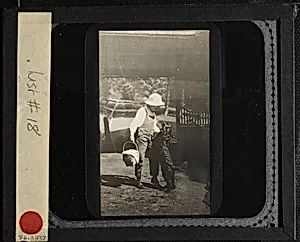
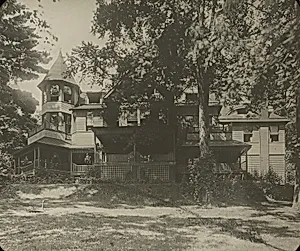
In the summer of 1922, while visiting the family estate at Lake George in the Adirondack Mountains of upstate New York (a tradition begun in 1872), Stieglitz embarked on what would become his most revolutionary photographic project. Beginning that year and continuing through 1934, he pointed his camera toward the clouds above Lake George, eventually creating more than 220 photographs in a series he initially called 'Songs of the Sky' and later 'Equivalents.' These images are generally recognized as the first photographs intended to free the subject matter from literal interpretation and among the first completely abstract photographic works of art. Stieglitz tilted his hand camera toward the sky to produce dizzying and abstract images of clouds' ethereal forms, maintaining that these works were a culmination of everything he had learned about photography in the previous forty years. He declared, 'My cloud photographs are equivalents of my most profound life experiences, my basic philosophy of life.'
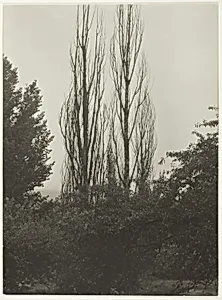
The Equivalents primarily show only the sky without any horizon, buildings, or other objects, though a small number include hills or trees, including a series from 1927 that prominently features poplar trees in the foreground. Almost all photographs are printed very darkly, with the sky often appearing black or nearly black, creating striking contrast with the much lighter clouds. Stieglitz was unconcerned with particular orientation for many prints and exhibited them sideways or upside down from their original mounting, destabilizing viewers' relationships with nature to encourage thinking less about nature itself and more about the emotional and spiritual equivalents the images represented. These photographs marked Stieglitz's complete transition from Pictorialism to a modernist aesthetic, arguing that photography could assume the same nonrepresentational qualities as music.
After several years away from running a gallery, Stieglitz opened The Intimate Gallery in 1925, his first commercial venture dedicated solely to American modern art. Operating from a rented room in the building housing the Anderson Galleries, Stieglitz mounted exhibitions from 1925 to 1929 featuring the 'Seven Americans'—a select group including Georgia O'Keeffe, Arthur Dove, Marsden Hartley, John Marin, Charles Demuth, and photographer Paul Strand. When that space closed, in 1929 Stieglitz opened An American Place on the seventeenth floor of a newly constructed Madison Avenue skyscraper. The gallery was relatively spacious—six rooms painted light pearl gray, three for exhibition and three for storage. Continuing a comparable exhibition schedule, Stieglitz focused on his stable of American artists with sporadic exhibitions of other photographers including the young Ansel Adams, who made a pilgrimage to New York in 1933 to visit the man he called 'the greatest photographic leader in the world,' and Eliot Porter. An American Place would remain open until Stieglitz's death, with Arthur Dove's eleven paintings comprising the gallery's final exhibition in 1946. During the 1930s, Stieglitz photographed less frequently, stopping altogether in 1937 due to failing health.
Although Stieglitz's photographic career effectively ended in 1937 when ill health forced him to put down his camera, he continued operating An American Place and promoting his stable of American artists. In early 1938, he suffered the first of six heart attacks that would strike him over the next eight years, increasingly limiting his activities but not his dedication to the artists he championed. The relationship between Stieglitz and O'Keeffe had evolved into a complex arrangement; starting in 1929, O'Keeffe began taking extended trips to New Mexico, falling in love with the colors and natural landscape that would redefine her artistic style. For the next twenty years, she spent summers living and working in New Mexico, often to the frustration of her husband, who remained at Lake George or in New York. Despite the physical distance and emotional strains—the relationship had waned into what some described as an abusive cycle marked by Stieglitz's jealousy and fear of his wife's rival career—the couple's unconventional relationship endured until Stieglitz's death.
In the summer of 1946, Stieglitz suffered a fatal stroke and went into a coma. O'Keeffe returned from New Mexico to New York and was with him when he died on July 13, 1946, at age 82. According to his wishes, a simple funeral was attended by only twenty of his closest friends and family members. Stieglitz was cremated, and O'Keeffe, along with his niece Elizabeth Davidson, took his ashes to Lake George and 'put him where he could hear the water,' the place where he had created some of his most profound and personal work. After his death, O'Keeffe assembled what she considered the best of his more than 2,500 mounted photographs that he had personally prepared, creating sets that she donated to major institutions. In some cases, she included slightly different versions of the same image, and these series remain invaluable for insights into Stieglitz's aesthetic evolution and compositional thinking.
Stieglitz's legacy is immeasurable. He forms a living bridge between the era of self-consciously aesthetic Pictorialist photography with its soft-focus lenses and the new straight photography of the 1920s and 1930s with its greater precision of description. His own work evolved from soft-focus Pictorialism to sharp-focus Modernism, influencing generations of photographers including Paul Strand, whose 1915-1917 photographs pioneered the shift to straight photography and were featured in the final issue of Camera Work (1917); Ansel Adams and Eliot Porter, who became pioneers of nature photography by applying straight photography principles to landscape; and countless others. His galleries introduced American audiences to modern art and photography, fundamentally shaping the course of 20th-century visual culture. His collection of paintings, works on paper, sculpture, and photographs became the foundation for the Metropolitan Museum of Art's modern collection. His legacy continues through significant deposits of work at institutions including the Metropolitan Museum of Art, Museum of Modern Art, Art Institute of Chicago, National Gallery of Art, Fisk University, Yale University, Philadelphia Museum of Art, and Museum of Fine Arts, Boston. Few individuals have exerted as strong an influence on 20th-century American art and culture as Alfred Stieglitz—photographer, publisher, gallerist, and champion of the belief that photography could be art of the highest order.
Biography length: ~2,847 words