
Ctrl K
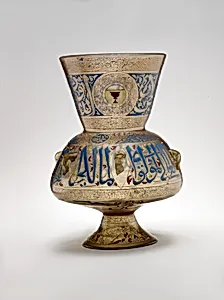
**Ali ibn Muhammad al-Barmaki** was an Egyptian glassmaker active in the fourteenth century during the Mamluk period. Little is known about his early life or training, as records of individual artisans from this era are limited. He is recognized primarily through his signed works in enameled and gilded glass, a sophisticated technique that flourished in Cairo under Mamluk patronage.
His most celebrated piece is the **Mosque Lamp of Amir Qawsun**, created around 1329–35. This large blown-glass vessel, now in the collection of the Metropolitan Museum of Art, features a colorless body with a brown tinge, applied foot, and intricate enamel and gold decoration. It was commissioned by the powerful amir Qawsun (d. 1342), a favorite of Sultan al-Nasir Muhammad ibn Qalaun, likely for one of his architectural projects such as a mosque or tomb complex in Cairo. The lamp exemplifies the functional yet luxurious objects produced for religious and public buildings.
Al-Barmaki worked within the vibrant tradition of Mamluk glassmaking, which combined technical mastery with elaborate calligraphic and ornamental designs. Similar lamps attributed to or associated with him, such as one linked to the mausoleum of Amir Aydakin al-‘Ala’i, highlight his role in supplying elite patrons. These works reflect the era’s emphasis on light as both practical illumination and symbolic reference to Qur’anic verses about divine radiance.
Today, al-Barmaki’s surviving creations serve as important examples of Islamic glass art preserved in major institutions like the Met and referenced in collections such as the Getty. They offer insight into the skilled craftsmanship and courtly culture of fourteenth-century Egypt, ensuring his contribution to Mamluk decorative arts endures.