
Mosque Lamp of Amir Qawsun
ca. 1329–35
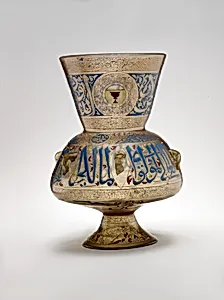
Medium
Glass, colorless with brown tinge; blown, blown applied foot, enameled and gilded
Dimensions
H. 14 1/8 in. (35.9 cm) Max. diam. 10 1/16 in. (25.6 cm) Diam. with handles 10 5/16 in. (26.2 cm)
Classification
Glass
Department
Islamic Art
Museum
Metropolitan Museum of Art, New York, NY
Credit
Gift of J. Pierpont Morgan, 1917
Accession Number
17.190.991
Rights
Public Domain
Tags
Art Historical Context
This exquisite Mosque Lamp of Amir Qawsun was created around 1329–35 by the glassmaker ‘Ali ibn Muhammad al-Barmaki. Standing just over fourteen inches tall, the vessel was formed from colorless glass with a subtle brown tinge, then finished with an applied foot, enamel decoration, and gilding. Such lamps were designed to hang in mosques, where they would hold oil and wicks, casting a warm, flickering light across prayer halls. The lamp reflects the refined artistic traditions of the Islamic world during the Mamluk period, when enameled and gilded glass reached extraordinary heights of technical and aesthetic achievement. Named artisans like al-Barmaki were celebrated for their skill in manipulating fragile materials into objects of lasting beauty and spiritual purpose. Arabic inscriptions, common on such works, often included Qur’anic verses or dedications, linking the object directly to both faith and patronage. Today, this piece offers visitors a tangible connection to fourteenth-century craftsmanship and the cultural importance of light in Islamic worship. Gifted to the Metropolitan Museum by J. Pierpont Morgan in 1917, it continues to illuminate the rich heritage of Islamic glassmaking for modern audiences.
About the Artist
'Ali ibn Muhammad al-Barmaki
**Ali ibn Muhammad al-Barmaki** was an Egyptian glassmaker active in the fourteenth century during the Mamluk period. Little is known about his early life or training, as records of individual artisans from this era are limited. He is recognized primarily through his signed works in enameled and gilded glass, a sophisticated technique that flourished in Cairo under Mamluk patronage. His most cele...