Ctrl K
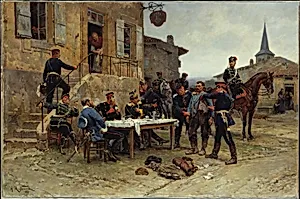
1835–1885
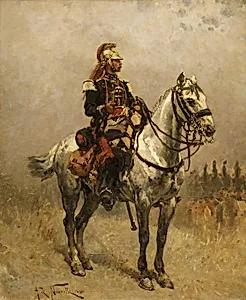
**Alphonse-Marie-Adolphe de Neuville (1835–1885)** was a French academic painter renowned for his vivid, patriotic depictions of military life and battle scenes. Born on 31 May 1835 in Saint-Omer to wealthy parents, he initially pursued a naval career, earning a *bachelier ès-lettres* degree before entering the naval school at Lorient in 1856 against his family’s wishes. There, his artistic talents emerged, leading him to abandon the navy for painting.
He studied under Eugène Delacroix and briefly worked in the studio of François-Edouard Picot, though he largely developed his skills independently. De Neuville began painting military subjects around 1858 and made his Salon debut in 1859 with scenes from the Siege of Sebastopol. His early works included *The Fifth Battalion of Chasseurs at the Gervais Battery (Malakoff)* and *The Guard Chasseurs in the Trenches of the Mamelon Vert* (1861). He also illustrated books such as Jules Verne’s *Twenty Thousand Leagues Under the Seas* and historical texts.
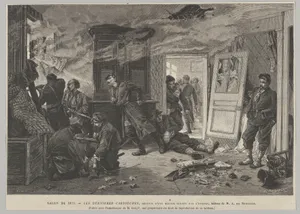
De Neuville reached the height of his fame after the Franco-Prussian War of 1870–71, channeling French revanchism into emotionally charged canvases that captured the realities of combat. Major works from this period include *Bivouac before Le Bourget* (1872), the celebrated *The Last Cartridges* (1873), *The Spy*, *The Cemetery of Saint-Privat* (1881), and *The Defence of Rorke’s Drift* (1880), which drew crowds in London and was acquired by the Art Gallery of New South Wales. He collaborated with Édouard Detaille on the *Panorama of Rézonville* and received the Légion d’honneur in 1881. His paintings are held in collections including the Hermitage Museum and the Metropolitan Museum of Art.
De Neuville died in Paris on 18 May 1885 at age 49. The French state acquired several of his works for the Palais du Luxembourg, ensuring his legacy as one of the foremost chroniclers of 19th-century French military experience. His dramatic realism and intense patriotism distinguished him from more conventional battle painters like Horace Vernet, influencing later generations of military artists.