Ctrl K
1848–1907
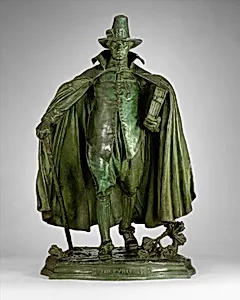
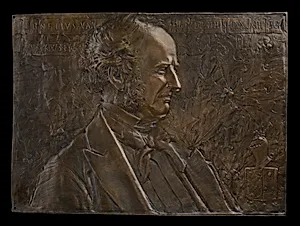
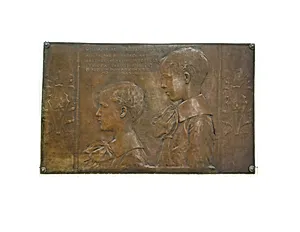
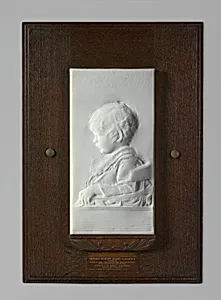
Augustus Saint-Gaudens (1848–1907) was an Irish-born American sculptor widely regarded as the greatest American sculptor of the nineteenth century. Born in Dublin to a French father and Irish mother, he was brought to New York City as an infant. He trained as a cameo cutter, studied at the Cooper Union and the National Academy of Design, and then traveled to Paris, where he studied at the École des Beaux-Arts under François Jouffroy, and to Rome.
Saint-Gaudens's breakthrough came with the "Admiral David Farragut Monument" (1881) in Madison Square Park, New York, which departed from conventional commemorative sculpture with its naturalistic, energetic figure and innovative base designed in collaboration with architect Stanford White. He went on to create a series of masterpieces that redefined American public sculpture.
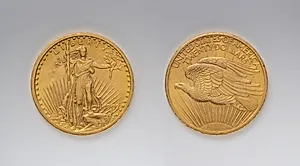
His greatest works include the "Robert Gould Shaw Memorial" (1884–97) on Boston Common, a magnificent bronze relief depicting the 54th Massachusetts Infantry, one of the first African-American regiments in the Civil War; the "Adams Memorial" (1886–91) in Rock Creek Cemetery, Washington, D.C., a mysterious, androgynous seated figure of haunting spiritual power; and his equestrian "General William Tecumseh Sherman" (1903) at the entrance to Central Park. He also designed the celebrated "Double Eagle" twenty-dollar gold coin (1907), widely considered the most beautiful American coin ever produced.
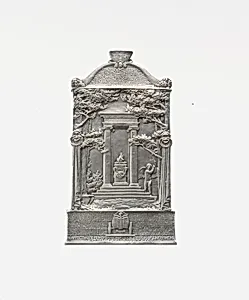
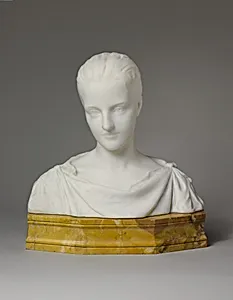
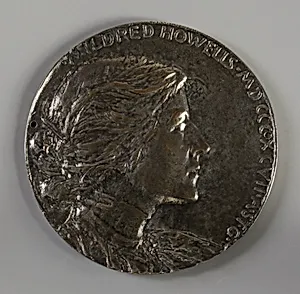
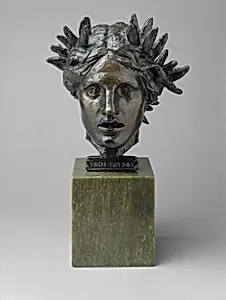
Saint-Gaudens's emphasis on naturalism, psychological depth, and collaboration with architects elevated American sculpture from derivative neoclassicism to an art of international stature. His work is held in public spaces across the United States and in the collections of the Metropolitan Museum of Art, the National Gallery of Art, and the Saint-Gaudens National Historical Park in Cornish, New Hampshire.