Ctrl K
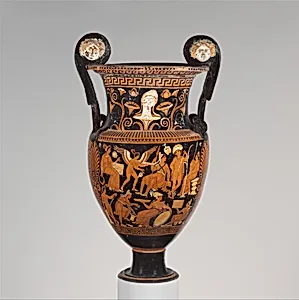
**The Baltimore Painter** was a prolific and highly influential Apulian vase painter active in South Italy during the final quarter of the fourth century BCE, roughly 330–310 BCE. As one of the last major figures in the Apulian red-figure tradition, he is widely regarded as the most important Late Apulian vase painter. His conventional name derives from a prominent volute krater now in the Walters Art Museum in Baltimore, which serves as his name vase.
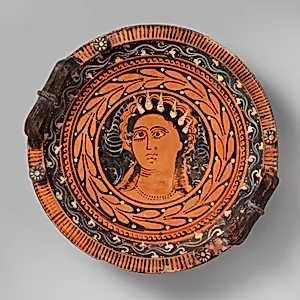
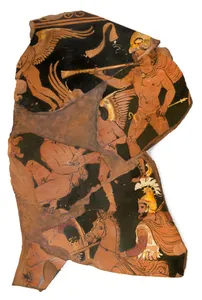
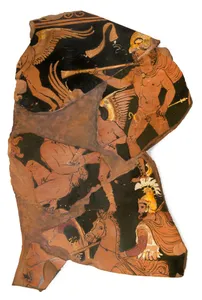
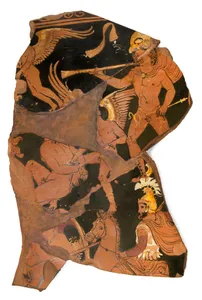
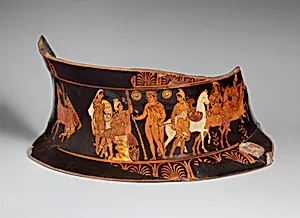
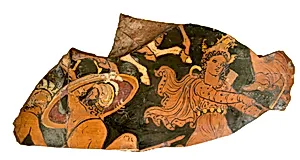
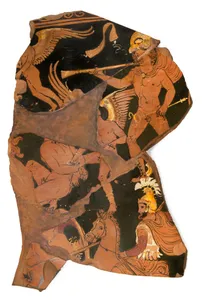
Little is known of his personal life or formal training, but his early works show a strong stylistic influence from the Patera Painter. He likely operated a workshop in or near Canosa in ancient Apulia (modern Puglia, Italy), where many of his vases and those of his associates have been found. The painter specialized in large-format vessels such as volute kraters, amphorae, loutrophoroi, and hydriai, executing them in the red-figure technique with exceptional richness of detail, particularly in ornamental patterns. His preferred subjects included funerary scenes featuring naiskoi (small shrines) often with figures in yellow-orange garments, mythological narratives, Dionysiac revels, erotes, weddings, and scenes from women’s daily life. His compositions share affinities with those of the Underworld Painter in both shape and thematic choices.
Among his best-known works is the Baltimore name vase, which depicts Hermes guiding a deceased woman to the afterlife on one side and a warrior in Campanian dress seated within a naiskos on the other. Numerous other volute kraters and smaller vessels attributed to him or his workshop survive in major collections, including examples at the Metropolitan Museum of Art and the British Museum. More than 1,500 vases have been linked to the artist and his circle on stylistic grounds.
The Baltimore Painter exerted considerable influence on subsequent generations. Close associates included the Stoke-on-Trent Painter (possibly the same individual) and members of the T.C. Group. His workshop’s probable heir was the White-Sakkos Painter, whose group, along with painters such as the Sansone Painter and those of the Stuttgart and Kantharos Groups, continued his artistic legacy into the early Hellenistic period. Today his output remains central to understanding the final flourishing of Apulian vase painting.