Ctrl K
1771–1835
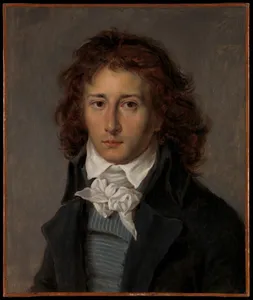
Baron Antoine-Jean Gros (1771–1835) was born in Paris to the miniature painter Jean-Antoine Gros and the artist Pierrette-Madeleine-Cécile Durand. Displaying prodigious talent from childhood, he began drawing under his father's tutelage at age six. In 1785, at just fourteen, Gros entered the studio of Jacques-Louis David, the preeminent Neoclassical master, while attending classes at the Collège Mazarin. This rigorous training in David's atelier, supplemented by early guidance from family friend Élisabeth Vigée Le Brun, honed his skills in history painting and portraiture, though Gros chafed against David's austere linearity, gravitating instead toward the vibrant colors and dynamic energy of Rubens and the Venetian masters.
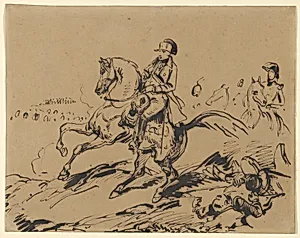
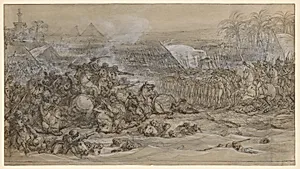
Gros's career ignited during the Napoleonic era. Exiled to Italy amid Revolutionary turmoil in 1793, he painted portraits in Genoa, where he met Joséphine de Beauharnais, securing an introduction to Napoleon. His breakthrough came with *Bonaparte at the Pont d'Arcole* (1796), an equestrian portrait glorifying Napoleon at the Battle of Arcole, which earned imperial patronage and led to Gros accompanying the army as *inspecteur aux revues*. Iconic commissions followed: *Bonaparte Visiting the Plague Victims of Jaffa* (1804), depicting Napoleon heroically touching plague victims to counter propaganda; *Napoleon on the Battlefield of Eylau* (1808); and *The Battle of the Pyramids* (1810). These monumental canvases blended Neoclassical clarity with proto-Romantic drama, vivid hues, and emotional intensity, cementing Gros as Napoleon's chief visual propagandist.
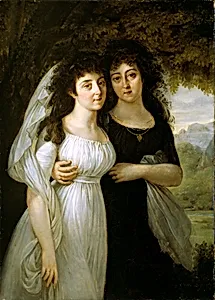
Under the Bourbon Restoration, Gros served as professor at the École des Beaux-Arts, inherited David's studio, and received the title Baron Gros from Charles X in 1824. His later works, like *Bacchus and Ariadne* (1820) and the ill-fated *Hercules and Diomedes* (1835), reverted to stricter Neoclassicism amid Romanticism's rise, which he lamented. A prolific portraitist and equine painter, Gros profoundly influenced Delacroix and Géricault, bridging Neoclassicism to Romanticism through his fusion of heroic scale and passionate vitality. Despondent over criticism at the 1835 Salon, he drowned himself in the Seine near Meudon, leaving a legacy as the painter of Napoleonic glory.