Ctrl K
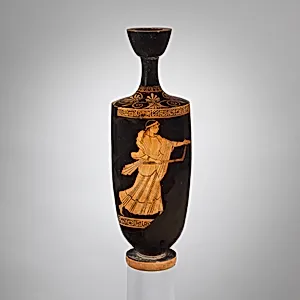
**The Berlin Painter** (active c. 505–460s BCE) is the conventional name given to one of the most accomplished Attic Greek vase painters of the early Classical period. An anonymous artist whose real name remains unknown, he worked in Athens and is celebrated for his masterful command of the red-figure technique. Over 400 vases and fragments have been attributed to him, many exported to Etruria and Magna Graecia, where they often served as elite grave goods.
His training began in the late sixth century BCE in the workshop tradition of the Pioneer Group, the artists who pioneered red-figure painting around 530 BCE. Alongside his contemporary and rival, the Kleophrades Painter, he helped bridge Late Archaic conventions with the emerging naturalism of the Early Classical style. Over his long career he trained numerous younger painters, most notably the Achilles Painter.
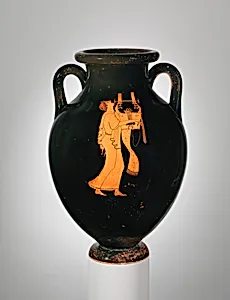
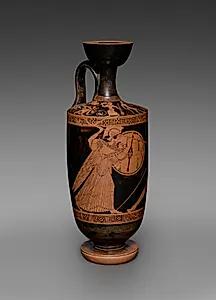
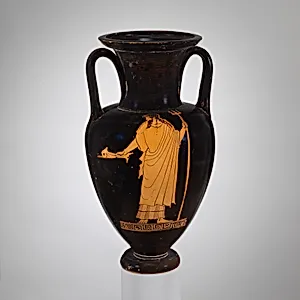
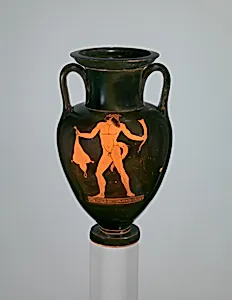
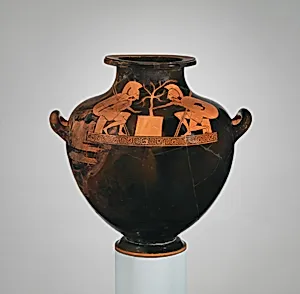
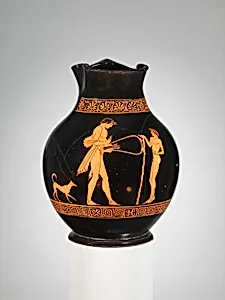
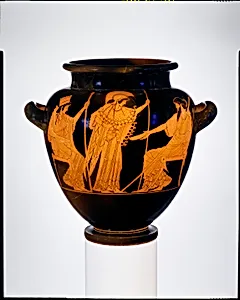
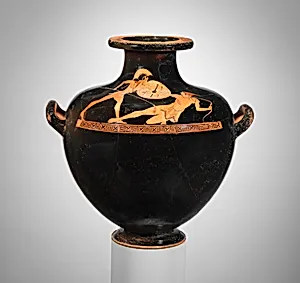
The Berlin Painter’s style is distinguished by its elegant restraint and technical precision. He frequently placed single or paired figures against a glossy black ground, allowing the red clay to stand out with crisp contours and graceful drapery. His figures often extend from the body of the vase onto the shoulder, their eyes rendered as long, open shapes with the pupil set toward the inner corner. He favored amphorae (including the Nolan type he helped popularize), kraters, hydriai, and Panathenaic amphorae, and he excelled at mythological subjects—especially Athena and Apollo—as well as athletes and animals. His name vase, a large lidded amphora in Berlin’s Antikensammlung depicting Hermes and a satyr with a fawn between them, exemplifies his ability to create unified, sculptural compositions.
A celebrated example of his work is the red-figure amphora in the Metropolitan Museum of Art showing a victorious kithara player and a judge or trainer, dated around 490 BCE. The Berlin Painter’s legacy lies in his refinement of red-figure draftsmanship and his influence on subsequent generations of vase painters. Exhibitions such as Princeton’s 2017 “The Berlin Painter and His World” continue to highlight his central role in the transition from Archaic to Classical Greek art.