
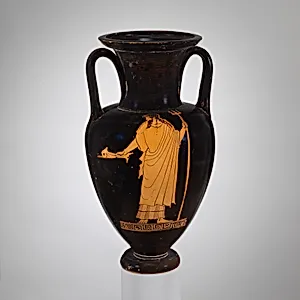
Terracotta Nolan neck-amphora (jar)
ca. 470–465 BCE
Medium
Terracotta
Dimensions
H. 14 1/16 in. (35.7 cm) diameter 7 3/4 in. (19.7 cm)
Classification
Vases
Culture & Period
Greek, Attic · Classical
Department
Greek and Roman Art
Museum
Metropolitan Museum of Art, New York, NY
Credit
Rogers Fund, 1941
Accession Number
41.162.17
Rights
Public Domain
Tags
Art Historical Context
This elegant terracotta Nolan neck-amphora, created around 470–465 BCE by the renowned Berlin Painter, exemplifies the refined artistry of Classical Greek vase painting. Standing just over 14 inches tall, this slender vessel was crafted in Athens using the red-figure technique, in which figures were left in the natural clay color against a black-glazed background. The Berlin Painter was celebrated for his graceful draftsmanship and ability to convey movement and emotion with minimal lines, making his works highly prized in antiquity. The amphora’s decorative program features mythological imagery connected to Poseidon, including dolphins and male figures, reflecting the Greeks’ deep reverence for the sea god who ruled over maritime realms. Dolphins often symbolized safe passage and divine favor in Greek art, suggesting the scene may evoke themes of protection or heroic journeys across the waves. As a functional storage jar, it would have held wine or oil while serving as a canvas for storytelling that connected daily life with the divine. Today housed in the Metropolitan Museum of Art, this vessel offers modern viewers an intimate glimpse into Athenian cultural values during the height of the Classical period. Its compact Nolan shape and sophisticated painting style highlight how even utilitarian objects became vehicles for artistic excellence and mythological narrative.
About the Artist
Berlin Painter
**The Berlin Painter** (active c. 505–460s BCE) is the conventional name given to one of the most accomplished Attic Greek vase painters of the early Classical period. An anonymous artist whose real name remains unknown, he worked in Athens and is celebrated for his masterful command of the red-figure technique. Over 400 vases and fragments have been attributed to him, many exported to Etruria and...