Ctrl K
**Berquin-Varangoz Workshop** was a distinguished French lapidary atelier specializing in intricate hardstone carvings, particularly in nephrite jade. Founded in 1875 in Bondy, northeast of Paris, by Mr. Varangoz, a skilled bronzier, the workshop passed to his daughter, the widow Berquin, around 1900, who continued and expanded its operations under the combined name.
The workshop excelled in the precise art of glyptics, transforming jade into elegant decorative objects that blended French technical mastery with refined, often East Asian-inspired aesthetics. Its pieces demonstrate exceptional skill in relief carving, polishing, and mounting, reflecting the high standards of late 19th- and early 20th-century Parisian luxury crafts. Active during a period when European ateliers increasingly supplied elite jewelers, Berquin-Varangoz became renowned for producing flower studies and other hardstone works for Cartier.
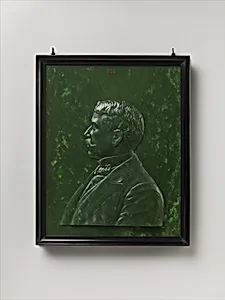
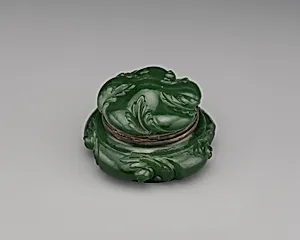
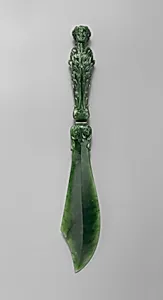
Among its documented masterpieces are three nephrite jade objects dated 1898 now in the Metropolitan Museum of Art: a delicate bonbonnière (candy box), a striking portrait relief of collector Heber R. Bishop, and an elegant paper knife. These works highlight the workshop’s ability to render lifelike details and luxurious surfaces in the challenging medium of jade.
The legacy of Berquin-Varangoz endures through its contributions to the golden age of French decorative arts and its role in supporting Cartier’s celebrated hardstone creations. Though the individual artisans remain largely anonymous, the workshop’s output stands as a testament to the collaborative excellence of Parisian lapidary traditions. Its pieces continue to be celebrated in museum collections for their technical brilliance and timeless elegance.