Ctrl K
1484–1551
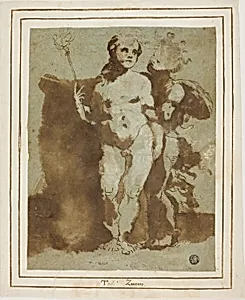
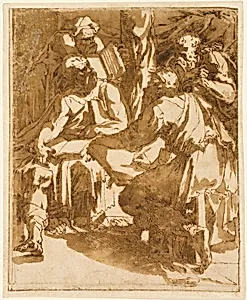
**Domenico di Pace Beccafumi**, known as Il Mecarino (1484/1486–1551), was an Italian Renaissance-Mannerist painter and one of the last great representatives of the Sienese school. Born near Siena as the son of a peasant, he was adopted by his father’s employer, Lorenzo Beccafumi, who recognized his talent and arranged for him to study under the local artist Mechero (or Mecarino), from whom he derived his nickname.
In 1509 Beccafumi traveled to Rome, where he absorbed influences from the artists then working in the Vatican, including echoes of Michelangelo and Raphael. He soon returned to Siena, however, and his style remained distinctly provincial and rooted in Sienese traditions rather than fully embracing the classical equilibrium of Florentine or Roman art. He produced religious paintings for churches and mythological decorations for private patrons, often marked by eccentric perspectives, hallucinogenic settings, discordant colors, and emotionally charged, sometimes phantasmagoric figures.
Beyond easel painting, Beccafumi directed the celebrated marble pavement of Siena Cathedral from 1517 to 1544, introducing technical innovations and designing scenes such as those from the stories of Ahab and Elijah, Melchisedec, Abraham, and Moses. He also created important fresco cycles, including Roman-history subjects in the Palazzo Pubblico (1532–1535), and executed major altarpieces and panels such as the *Trinity Triptych* (1513), the *Mystic Marriage of Saint Catherine* (c. 1528), and the *Sarteano Annunciation* (c. 1546).
Beccafumi’s legacy lies in his preservation of the mystical, emotionally intense character of Sienese painting into the Mannerist era, even as Siena’s artistic prominence waned. His vibrant, fluid figures and unconventional compositions continue to distinguish him among sixteenth-century Italian artists, bridging medieval sensibilities with emerging Renaissance and Mannerist currents.
All 2 artworks loaded