Ctrl K
1829–1916
Carleton E. Watkins (1829–1916), one of America's pioneering landscape photographers, was born on November 11, 1829, in Oneonta, New York, the eldest of eight children to carpenter John Watkins and innkeeper Julia. Drawn by the Gold Rush, he arrived in San Francisco in 1851 at age 22 alongside childhood friend Collis Huntington, who later became a railroad tycoon. Initially working as a carpenter and store clerk near daguerreotypist Robert H. Vance's studio, Watkins learned the basics of photography there after filling in as manager, honing his skills in portraiture before striking out on his own around 1858.
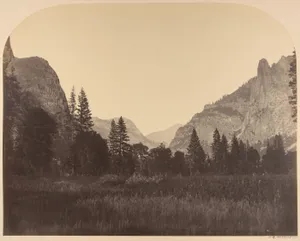
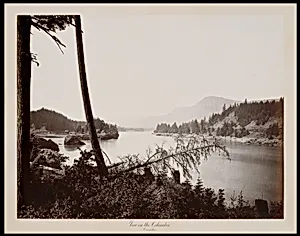
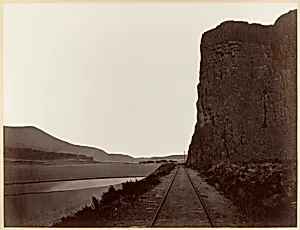
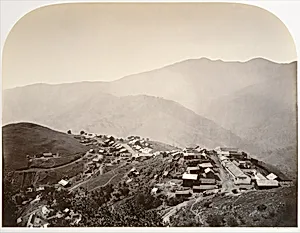
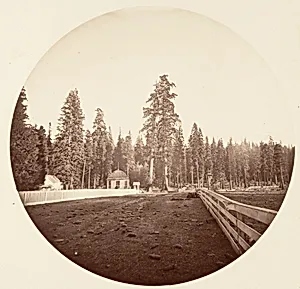
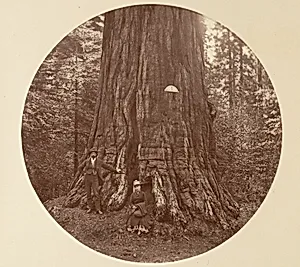
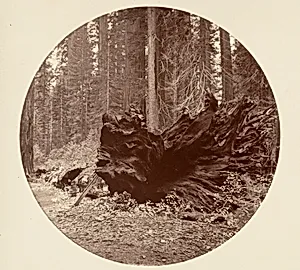
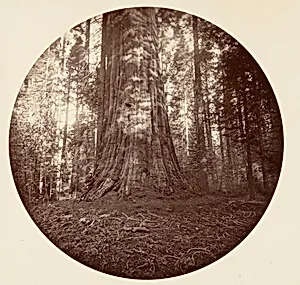
Watkins revolutionized Western landscape photography with his massive mammoth-plate camera, producing 18x22-inch glass negatives that captured unprecedented detail in sweeping vistas. His breakthrough came during his first Yosemite expedition in 1861, yielding 30 mammoth plates and 100 stereoview negatives, including iconic images like *El Capitan* (1861), *Nevada Fall, 700 ft.* (1861), and *Section of the Grizzly Giant, Mariposa Grove* (1861). These works, praised for their sublime compositions and reflections—such as *Washington Column, Mirror View* (ca. 1865–66)—not only wowed East Coast audiences at New York's Goupil Gallery in 1862 but also swayed Congress to grant Yosemite protected status in 1864, signed by President Lincoln. He returned to Yosemite at least seven times over two decades, while documenting Columbia River sites like *Cape Horn* (1867) and *Multnomah Falls* (1867), mining operations, and the transcontinental railroad's construction.
In 1867, Watkins opened the opulent Yosemite Art Gallery in San Francisco, showcasing thousands of Pacific Coast views, though financial woes plagued him: creditors seized his negatives, plagiarists copied his uncopyrightable images, and the 1906 earthquake destroyed his studio. Married to Frances Sneed in 1879, he fathered Julia (1881) and Collis (1883); blindness and poverty led to his commitment to Napa State Hospital in 1910, where he died on June 23, 1916.
Watkins's monumental photographs immortalized the untamed West before industrialization, birthing visual icons like Half Dome and fueling the national parks movement—from Yosemite to Yellowstone. Mount Watkins in Yosemite bears his name, and his legacy endures in our virtual museum's collection of 243 works, inspiring generations from Ansel Adams to modern environmentalists with his masterful blend of artistry and advocacy.
![[Yosemite National Park, California]](https://images.artheonmuseum.org/met/ph/thumb/yosemite-national-park-california-732760.webp)
![[Yosemite National Park, California]](https://images.artheonmuseum.org/met/ph/thumb/yosemite-national-park-california-732798.webp)
![[Yosemite National Park, California]](https://images.artheonmuseum.org/met/ph/thumb/yosemite-national-park-california-732778.webp)
![[Yosemite National Park, California]](https://images.artheonmuseum.org/met/ph/thumb/yosemite-national-park-california-732763.webp)
![[Yosemite National Park, California]](https://images.artheonmuseum.org/met/ph/thumb/yosemite-national-park-california-732784.webp)
![[Yosemite National Park, California]](https://images.artheonmuseum.org/met/ph/thumb/yosemite-national-park-california-732755.webp)
![[Yosemite National Park, California]](https://images.artheonmuseum.org/met/ph/thumb/yosemite-national-park-california-732776.webp)
![[Yosemite National Park, California]](https://images.artheonmuseum.org/met/ph/thumb/yosemite-national-park-california-732785.webp)
![[Yosemite National Park, California]](https://images.artheonmuseum.org/met/ph/thumb/yosemite-national-park-california-732759.webp)
![[Yosemite National Park, California]](https://images.artheonmuseum.org/met/ph/thumb/yosemite-national-park-california-732780.webp)
![[Yosemite National Park, California]](https://images.artheonmuseum.org/met/ph/thumb/yosemite-national-park-california-732796.webp)