Ctrl K
1841–1917
**Charles Hindley and Sons: Victorian Masters of Furnishing Design**
Charles Hindley and Sons was a premier British cabinet-making and upholstery firm based in London, operating primarily from 134 Oxford Street. Established around 1820 by Charles Hugh Hindley, a furniture maker and upholsterer initially on Berners Street, the firm expanded significantly in 1844 by acquiring the rival establishment Miles & Edwards, relocating to their prominent Oxford Street premises the same year. This strategic move propelled them to the forefront of the Victorian furnishing trade, where they supplied high-quality pieces ranging from bespoke furniture and mirrors to carpets and wall coverings, eventually earning a Royal Warrant for their excellence. Their early history prior to the takeover remains sparsely documented, reflecting the firm's focus on commercial success over personal narratives.
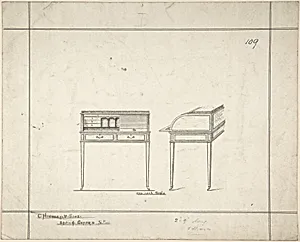
The firm worked in the rich Victorian Gothic Revival tradition, blending intricate detailing with functional elegance, while also embracing Anglo-Japanese influences in later commissions. Notable among their output were innovative pieces like adjustable "reading stations"—double wing-back seats with built-in writing desks and compartments—and sturdy mahogany Davenport desks with sliding twist tops. They crafted everything from figured mahogany side cabinets and walnut writing tables to Chesterfield sofas upholstered in luxurious velvet, often collaborating with designers such as Thomas Jeckyll on exotic desks. Surviving stamped furniture attests to their meticulous craftsmanship, prioritizing durability and opulent ornamentation suited to the era's grand interiors.
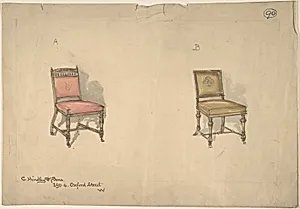
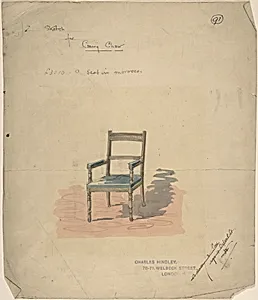
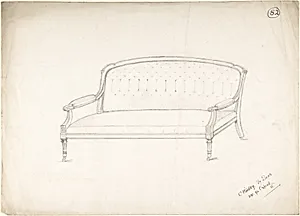
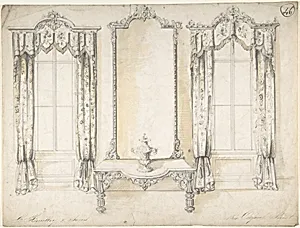
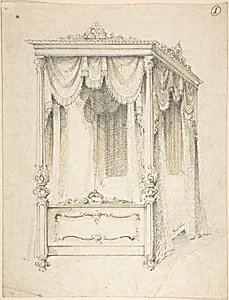
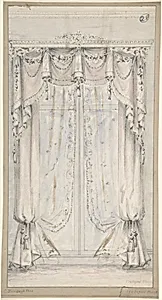
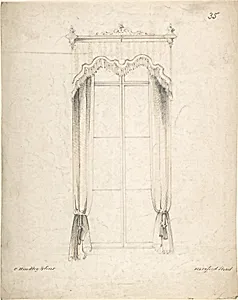
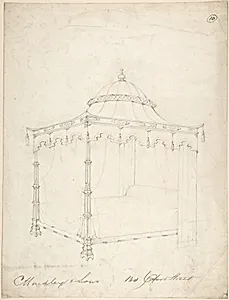
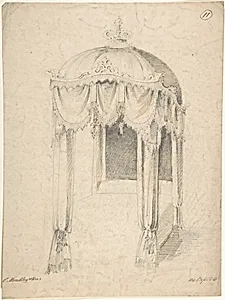
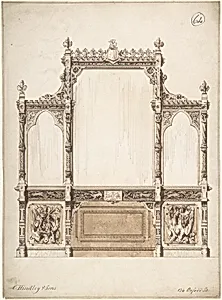
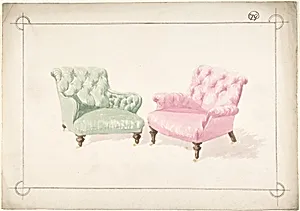
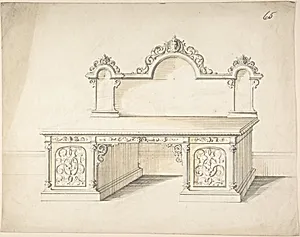
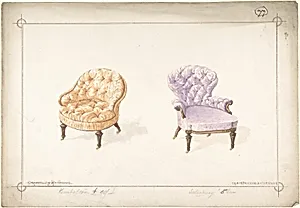
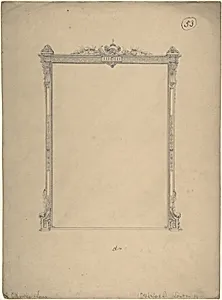
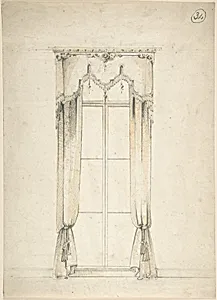
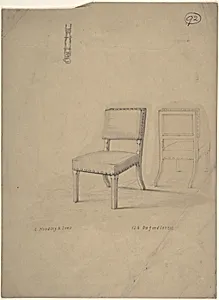
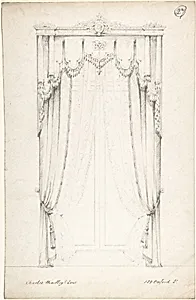
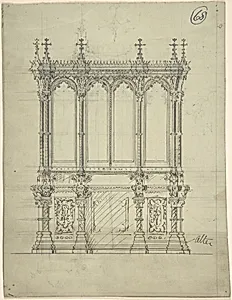
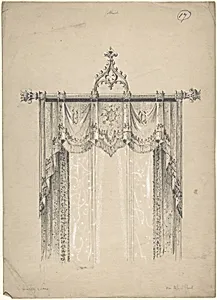
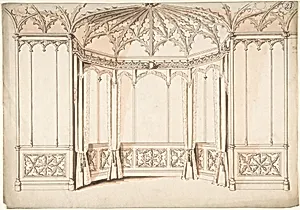
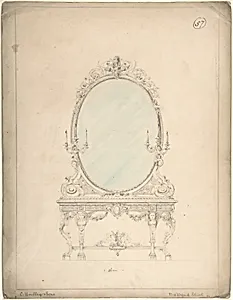
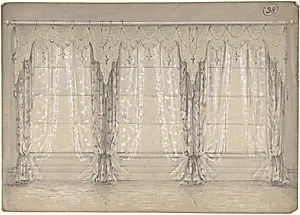
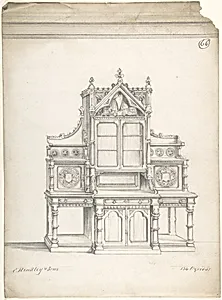
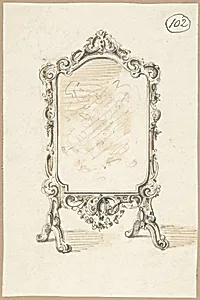
A treasure trove of over 100 of their preparatory drawings survives in the Metropolitan Museum of Art's collection, forming a comprehensive album of designs dated circa 1841–84 (with some extending to 1892). These include *Design for a Gothic Interior*, *Designs for Two Chairs*, *Front and Side Views of Breakfronts*, and elaborate schemes for curtains, bed canopies, and frames, executed in pen and ink, watercolor over graphite, and brush washes. These works reveal a mastery of period styles, from pointed arches and foliate motifs to practical room layouts.
Hindley and Sons thrived through the mid-19th century but closed in November 1892 amid rising competition from mass producers. Their legacy endures in auction houses and museums, where their furniture commands admiration for embodying Victorian ingenuity and luxury. Pieces continue to grace country houses and collections, underscoring the firm's pivotal role in shaping Britain's decorative arts during a transformative age.(Word count: 378)